

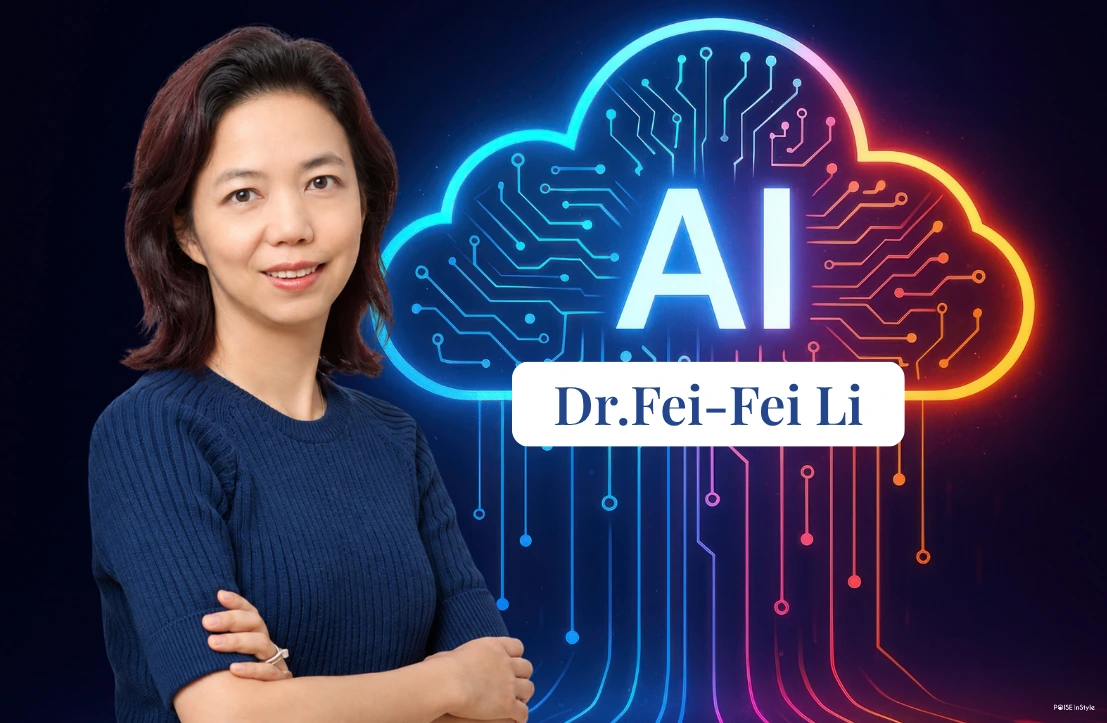
To alter the course of a whole field of technology requires something. For Fei-Fei Li, an artificial intelligence researcher of some of the most repute in the world, it was an idea that was at once simple and bold: put computers to the task of recognising and comprehending the visual world on a scale not previously seen.
Li is today’s “Godmother of AI”, a title earned by the foundational computer vision work she has done. Much of that is tied to ImageNet, the large-scale image dataset that did much to speed up the deep-learning revolution of recent years. As a Stanford professor, co-director of the university’s Human-Centered AI Institute and the CEO and co-founder of World Labs, she has been occupied for decades with a question that will define the future of AI: in what way can machines have a better grasp of their surroundings?
The story of her career is more than a recitation of a well-regarded scientist’s accomplishments. It shows how an industry can be remade by a research concept, the part data plays in AI and the demands of carrying out ambitious projects in both business and academia.
From Immigrant Teenager to AI Pioneer
Li came to the U.S. from China with her parents as a teen. She made her way through the American public-school system while picking up English and getting ready for college, all in a new country with an education system she did not know. Most profiles put her age at 15 when she arrived, if not 16.
She would go on to get a PhD at the California Institute of Technology (Caltech). A physics student at first, Li found her interests turning to neuroscience and computer vision. She wanted to see how machines could be taught to make sense of the visual information before them.
It was that line of inquiry which produced ImageNet, a project that stands as a milestone in her career and a pivot for AI research.
ImageNet: The Project That Changed AI Research
In 2007, then an assistant professor at Princeton University, Li set about creating ImageNet. Computer vision researchers were up against a problem then: for a computer to identify objects with any accuracy it required a great deal of labelled visual data.
ImageNet was meant to fill that void. Some 15 million images were put together in 22,000 categories, with the labelling done by tens of thousands of people in a crowdsourced effort. The size of it was its value. Researchers no longer had to make do with smaller collections; they had a big dataset with which to put image-recognition algorithms to the test. It also underwrote the ImageNet Challenge, giving teams a common benchmark for their systems.
Then in 2012 Geoffrey Hinton’s group put AlexNet, a neural network, to use and saw a marked step up in performance. It was proof of what deep learning could do with the right computing power and datasets. While ImageNet did not single-handedly invent deep learning, it showed what it could do at scale. In tandem with AlexNet, it is given credit for the deep-learning boom that has put modern computer vision and current AI systems where they are.
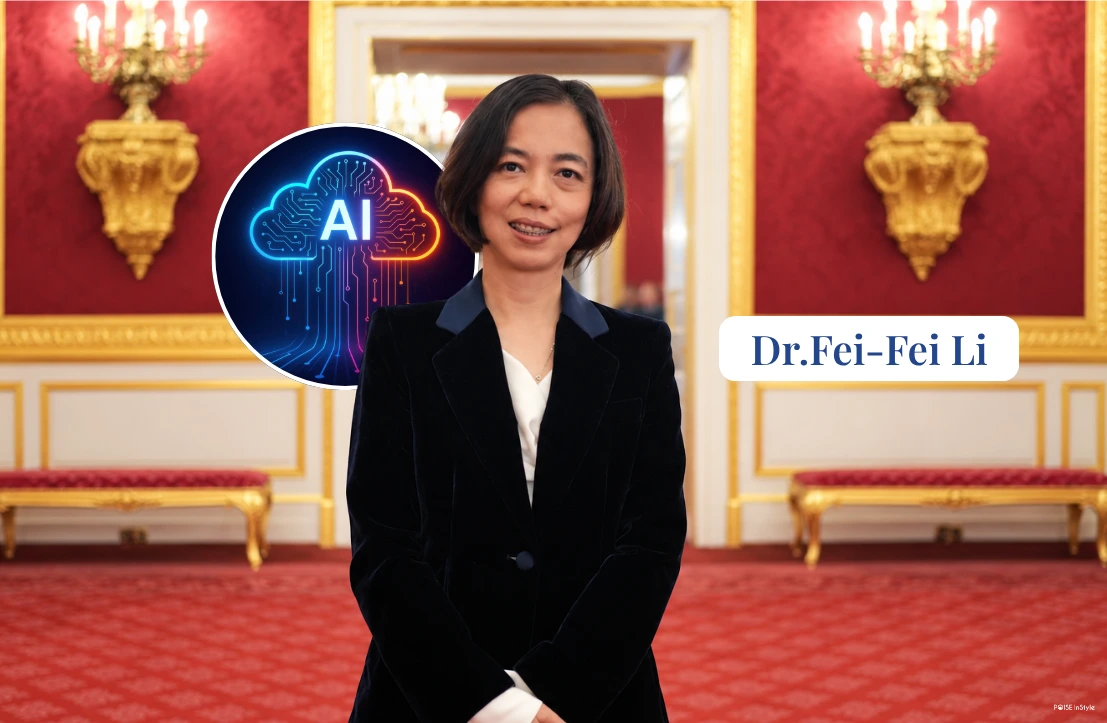
For those looking to make sense of AI’s present day capabilities, Li’s work is instructive. It is not just the algorithm but the organisation and quality of the data behind it that counts.
Beyond ImageNet: From Stanford to Google and World Labs
Li has not confined herself to image recognition. In over 20 years she has put in work on robotics, healthcare AI, deep learning and human-centred artificial intelligence.
She was director of the AI Lab at Stanford from 2013 until 2018. The following year she helped start the university’s Human-Centered AI Institute to push AI forward while taking into account its impact on society. Her resume also includes time in the tech industry. Between 2017 and 2018 she was a vice president at Google and chief scientist for AI/ML at Google Cloud, putting her research to work in a commercial setting.
World Labs is her latest venture. Co-founding the company in 2024, she is now its CEO. World Labs is concerned with spatial intelligence, or the development of AI that can reason and act in three-dimensional space. It is a different order of machine intelligence from the text and image tools one is used to; here the aim is to give systems a fuller picture of physical spaces and the relation of objects within them.
Why Fei-Fei Li’s Work Matters Today
Her standing is not down to having put together a notable dataset. With ImageNet she made clear the need for large amounts of good data to move machine learning along, changing the approach of many in computer vision.
What she has done underlines how AI advances through a mix of research, data and sustained experimentation. There is also her emphasis on human-centred AI, which puts a spotlight on the effect of these technologies on their users.
The path from a teenage immigrant to a top academic and entrepreneur has been one of persistence and curiosity. “Godmother of AI” is an apt description of her influence, but her record offers a better lesson: you build major shifts in technology with the kind of basic research that equips others to go further.
With AI still in flux, the questions Li has been after are the ones that will matter in its next chapter: how do machines learn and understand the world and how ought people to direct that process?

