


The rise of insect-powered sustainability- and why it’s quietly becoming a lifestyle habit, not just an agritech solution
There is a silent shift happening in how we think about waste. Not the kind that shows up in policy debates or sustainability reports, but the kind that sits in our kitchens, farms, and food systems every single day- vegetable scraps, crop residue, unused organic matter. For decades, most of this has been discarded, burned, or buried, treated as a problem to manage rather than an opportunity to unlock.
But what if that very waste could power the next cycle of growth?
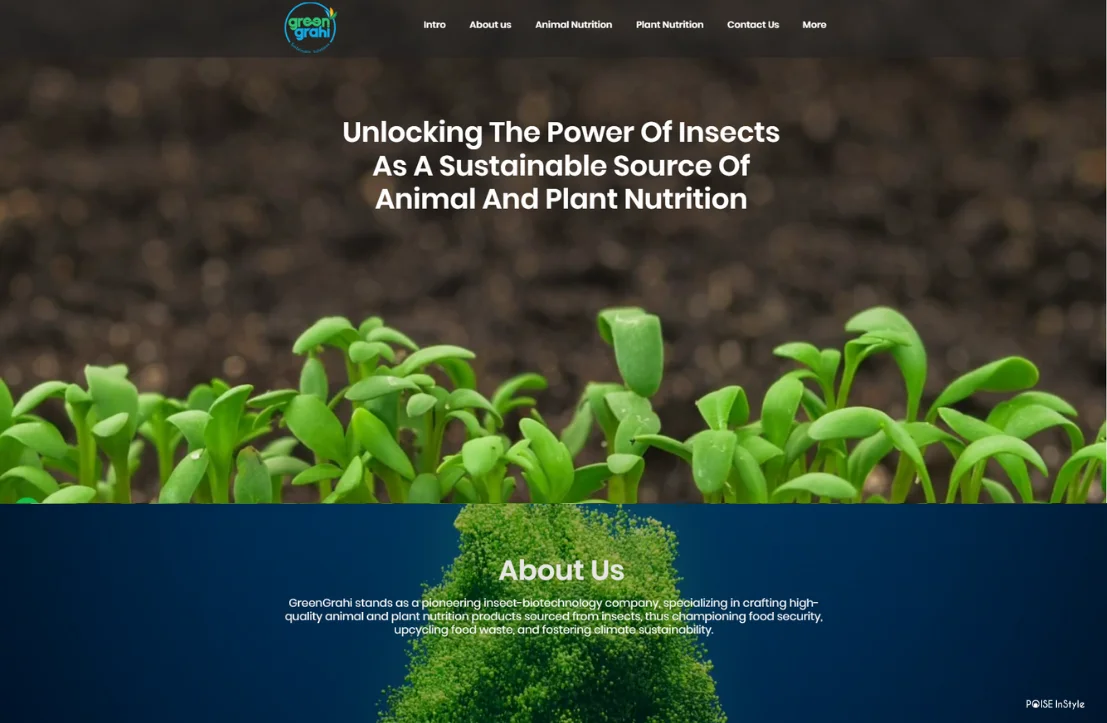
This is the idea at the heart of The GreenGrahi, a circular bio-solutions startup co-founded by Shivali Sugand. By working with nature instead of against it, the company is building a system where waste is no longer the end of a lifecycle, but the beginning of a new one. And in doing so, it is quietly reshaping not just agriculture, but the everyday habits that define sustainable living.
When waste becomes the most valuable resource
India generates millions of tonnes of organic waste every year, from agricultural leftovers to food-processing by-products. Much of it ends up in landfills or is burned in open fields, contributing to pollution and climate stress.
Yet, this so-called waste is rich in nutrients- proteins, minerals, and organic compounds that can be reused.
The problem has never been about availability. It has always been about conversion.
GreenGrahi approaches this challenge with a mindset that feels both scientific and intuitive: instead of removing waste, it transforms it. Instead of treating it as disposal, it treats it as raw material.
The power of the smallest workers in the ecosystem
At the center of this transformation is a surprisingly simple organism- the Black Soldier Fly. Known for its ability to rapidly break down organic matter, its larvae act as natural converters, turning waste into nutrient-dense biomass in a matter of days.
GreenGrahi harnesses this biological process to create high-performance outputs. Organic waste is fed to these larvae, which then produce protein-rich biomass and functional oils. These can replace conventional animal feed ingredients like fishmeal and soy, which are resource-intensive and often environmentally taxing.
The result is a system that is not only efficient but also deeply aligned with nature’s own cycles.
But the process doesn’t stop at protein. The residue left behind- often overlooked in traditional systems- is converted into biofertilisers and soil enhancers. This creates a dual-output model where nothing is wasted, and every stage adds value.
Closing the loop at a local level
What makes GreenGrahi’s model particularly compelling is its focus on local ecosystems. Instead of building long, complex supply chains, the company works within communities- farms, dairies, and food-processing units- to source waste and return value.
This creates a closed-loop system.
A farm’s waste becomes its own input. A food-processing unit’s by-products are transformed into resources that can be reused within the same region. Transportation costs drop, emissions reduce, and dependency on external inputs decreases.
For smallholder farmers, this is more than a sustainability solution- it is an economic shift. Waste handling becomes a source of income. Inputs become more affordable. And resilience becomes part of the system, not an afterthought.
A new kind of infrastructure for sustainable living
GreenGrahi’s innovation is not just biological- it is also infrastructural. Through systems like Climate Cubes™, the company has developed modular, scalable units that can process organic waste efficiently across different environments.
These systems are designed for real-world conditions, where waste streams are inconsistent and resources are limited. By combining engineering with biology, GreenGrahi is building a new kind of infrastructure- one that supports the circular economy at a grassroots level.
This is particularly significant in a country like India, where decentralised solutions often work better than large, centralised systems.
From agritech to everyday lifestyle
While GreenGrahi operates in the agritech and bio-solutions space, its impact extends far beyond farms.
It influences how businesses think about production.
It shapes how communities manage waste.
And it subtly changes how consumers understand sustainability.
Over time, these changes turn into habits.
Sustainability is no longer about occasional choices- it becomes part of daily routines. The food we eat, the products we use, and the systems we support all begin to reflect a circular mindset.
This is where GreenGrahi moves beyond being a startup and becomes part of a larger lifestyle shift.
Women leading the future of climate-tech
Shivali Sugand’s journey also reflects a broader change in the innovation landscape. Women are increasingly stepping into leadership roles in sectors like agritech, bioengineering, and climate-tech- fields that require both scientific understanding and on-ground execution.
Her work stands out because it operates at the intersection of technology and reality. It is not confined to digital platforms or theoretical models. It engages directly with farms, waste streams, and biological systems.
This kind of leadership is redefining what innovation looks like. It shows that impactful solutions often come from working closely with the environment, not just building tools to manage it.
Why circular thinking is the future
As global conversations around sustainability evolve, one concept continues to gain traction: the circular economy.
Unlike traditional linear systems- where resources are used and discarded- circular systems are designed to reuse, regenerate, and restore. GreenGrahi embodies this philosophy in a tangible way.
Every input is reimagined.
Every output is repurposed.
Every process is part of a cycle.
This approach not only reduces waste but also creates new economic opportunities. It turns environmental challenges into business models and aligns profitability with sustainability.
Changing how we define value
Perhaps the most profound impact of GreenGrahi’s work lies in how it changes our perception of value.
In conventional systems, value is often associated with finished products. Raw materials are valuable, but waste is not. GreenGrahi disrupts this thinking by showing that value exists at every stage of the lifecycle.
A discarded vegetable peel is not just waste—it is potential protein.
A pile of crop residue is not just debris- it is future soil nutrition.
This shift in perspective has far-reaching implications. It encourages more mindful consumption, more efficient production, and a deeper respect for resources.
The road ahead: a more resilient way of living
As climate challenges intensify and resources become more constrained, solutions like GreenGrahi will become increasingly important.
They offer a way to build resilience- not by adding more resources, but by using existing ones more intelligently. They reduce dependency on external systems and create self-sustaining ecosystems.
For communities, this means greater stability.
For businesses, it means smarter operations.
For individuals, it means living in a way that aligns with the environment.
Final thoughts: where change truly begins
The story of GreenGrahi is not about grand gestures or sweeping transformations. It is about small, consistent shifts in how we see and use resources.
By turning waste into something valuable, Shivali Sugand and her team are not just solving a problem- they are changing a mindset.
And that mindset has the power to influence everything from agriculture to lifestyle choices.
Because in the end, sustainability is not just about what we produce. It is about how we think.
And sometimes, the most powerful change begins with a simple idea:
nothing should go to waste.

