


A Campaign That Shifts the Conversation
India has long struggled with how it talks about alcohol addiction. Often reduced to phrases like “lack of control” or “bad habits,” dependency has been framed more as a character flaw than a health condition. The “Off The Rocks” campaign is attempting to change that narrative– and it’s doing so with both emotional honesty and clinical credibility.
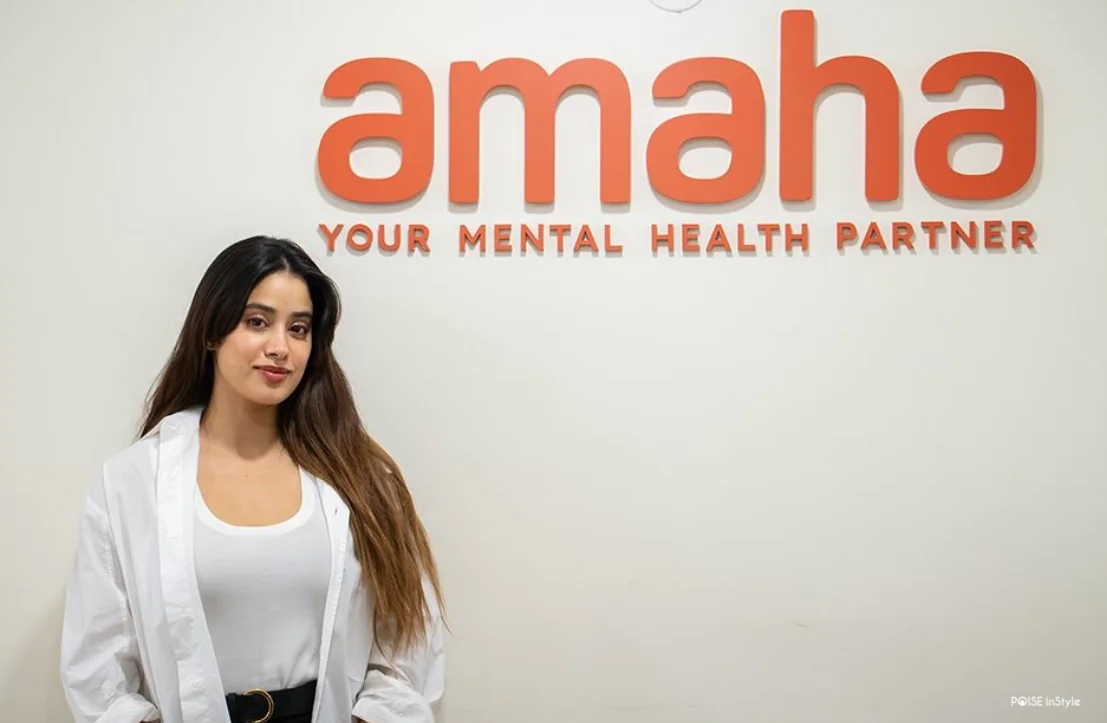
At the heart of this initiative is Amaha, a digital mental health platform that is bringing science-backed care into the mainstream, and Janhvi Kapoor, whose involvement adds cultural relevance and reach. Together, they are reframing alcohol addiction as a complex mental health issue– one that deserves understanding, not judgment.
What Amaha Brings to the Table
Founded in 2020 by Viraj Bindrani and Kajal Bhasin, Amaha has emerged as one of India’s most trusted names in digital mental health. Unlike generic wellness apps, Amaha’s approach is deeply rooted in evidence-based therapy, particularly cognitive behavioral therapy (CBT), which is widely used to treat addiction and behavioral disorders.
The platform offers structured programs designed for real-life challenges– whether it’s anxiety, depression, or alcohol use disorder. Users are guided through personalized journeys that include daily emotional check-ins, therapy exercises, and access to trained psychologists and psychiatrists. This combination of technology and clinical expertise makes Amaha particularly effective in addressing issues that require consistency and long-term support.
In the context of “Off The Rocks,” Amaha plays a crucial role. It ensures that the campaign is not just about raising awareness but also about offering tangible solutions. For someone recognizing their own struggles through the campaign, Amaha becomes the next step– a place where awareness can turn into action.
Janhvi Kapoor’s Role: More Than Just Visibility
Celebrity partnerships often risk feeling performative, but Janhvi Kapoor’s involvement in “Off The Rocks” feels aligned with the campaign’s intent. Instead of delivering a distant, polished message, her association brings a sense of openness to the conversation.
Kapoor’s presence helps normalize a topic that many still find uncomfortable. For younger audiences especially, she acts as a bridge– making mental health conversations feel less clinical and more personal. In a culture where public figures often avoid discussing sensitive issues, her participation signals a shift toward more honest, meaningful advocacy.
This is not about glamorizing recovery or simplifying addiction. It’s about making the conversation accessible. And that accessibility is what allows campaigns like this to reach beyond awareness and into impact.
Understanding the Scale of the Problem
The importance of “Off The Rocks” becomes clearer when placed against India’s broader addiction landscape. According to the NIMHANS, nearly 30 million Indians are dependent on alcohol. That’s a significant portion of the population, yet the number of people seeking help remains disproportionately low.
Data from the World Health Organization highlights a critical gap– only a small percentage of those affected ever access treatment. The reasons are complex, but stigma plays a central role. Many individuals hesitate to seek help because they fear being judged, misunderstood, or labeled.
This is where the messaging of “Off The Rocks” becomes powerful. By shifting the focus from blame to understanding, it reduces the emotional barriers that often prevent people from acknowledging their struggles in the first place.
A Cultural Shift Toward Awareness
What makes this campaign particularly relevant right now is the changing mindset around alcohol consumption in India. Urban audiences, especially younger generations, are beginning to question long-held habits. Conversations around mindful drinking, wellness, and mental health are gaining momentum.
“Off The Rocks” fits seamlessly into this evolving landscape. It doesn’t impose a rigid idea of sobriety. Instead, it encourages reflection– asking individuals to look at their relationship with alcohol with honesty and without fear.
This subtle shift is important. It moves the conversation away from extremes and toward awareness, which is often the first step toward meaningful change.
Why This Campaign Matters
At its core, “Off The Rocks” is not just about alcohol– it’s about how India understands mental health. By combining Amaha’s clinical expertise with Janhvi Kapoor’s cultural influence, the campaign creates a rare balance between credibility and relatability.
It acknowledges that addiction is not a one-size-fits-all experience. It recognizes the emotional, psychological, and social layers involved. And most importantly, it creates space– for people to reflect, to talk, and to seek help without feeling ashamed.
In a society where silence has long surrounded mental health struggles, this shift is significant. It signals a move toward a more informed, compassionate way of thinking– one where seeking support is seen not as a weakness, but as a step toward self-awareness.
The Bottom Line
“Off The Rocks” stands out because it doesn’t try to simplify a complex issue. Instead, it invites people to sit with that complexity and understand it. With Amaha providing the science and Janhvi Kapoor bringing the conversation into the cultural mainstream, the campaign is setting a new tone for how India approaches addiction.
And perhaps that’s its biggest impact– it reminds us that change doesn’t always begin with solutions. Sometimes, it begins with simply seeing the problem differently.

