

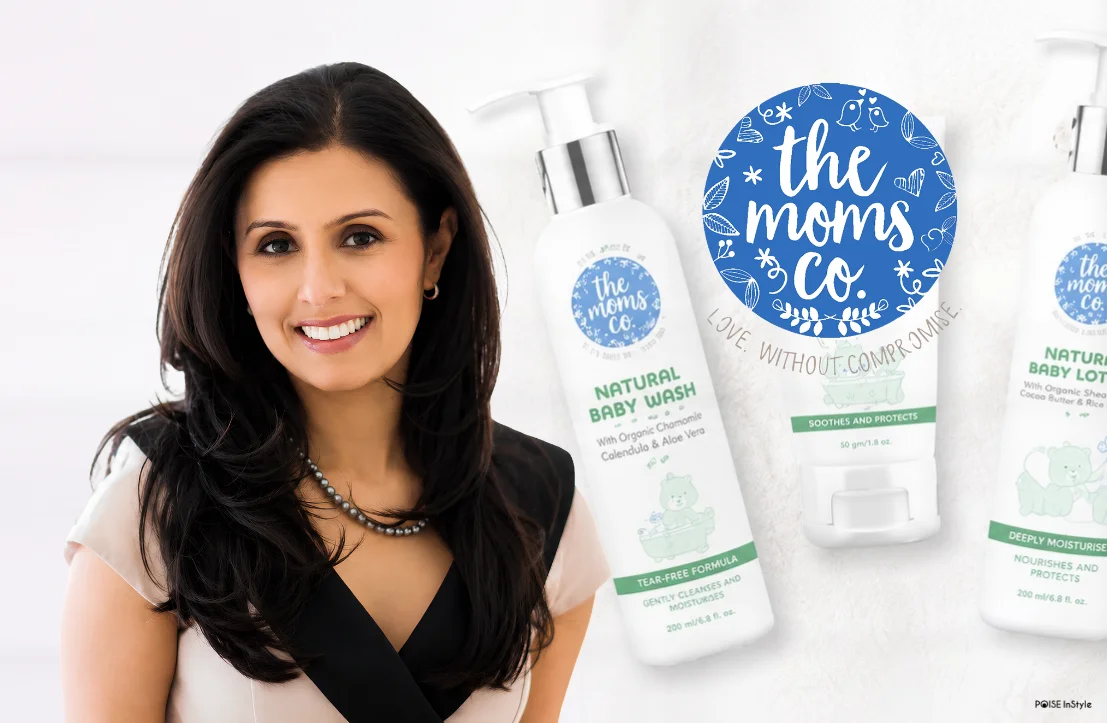
A Personal Parenting Challenge That Sparked a Business Opportunity
Some of the most successful businesses are born from personal experiences, and Malika Sadani’s entrepreneurial journey is a perfect example. What began as a mother’s search for safe skincare products for her daughter’s sensitive skin eventually led to the creation of The Moms Company, one of India’s most recognized toxin-free baby and mom care brands.
Today, her story stands as an inspiring example of how identifying a real consumer problem and building a solution around it can create extraordinary business success. From leaving a promising finance career to building a brand that was eventually acquired for ₹500 crore, Sadani’s journey offers valuable lessons for entrepreneurs, parents, and business leaders alike.
How The Moms Company Was Born
The idea for The Moms Company emerged when Malika Sadani struggled to find genuinely safe and toxin-free skincare products for her daughter. As she researched the market, she realized that many parents shared the same concerns about ingredients used in baby and maternal care products.
Instead of relying solely on her own experience, Sadani spoke with more than 200 mothers to better understand their challenges. The conversations revealed a significant gap in the market. Parents wanted trustworthy, safe, and natural products, but their options were limited.
Recognizing this unmet need, Sadani decided to turn the insight into a business opportunity. In 2016, she left her finance career and co-founded The Moms Company with a clear mission: to provide toxin-free products designed specifically for mothers and babies.
Building a Brand on Trust and Consumer Insights
From the beginning, The Moms Company differentiated itself by focusing on transparency, safety, and consumer trust. The brand’s foundation was built on direct feedback from mothers, giving it a deep understanding of what customers truly wanted.
This consumer-first approach quickly resonated with parents across India. As awareness around clean beauty and ingredient safety grew, the company gained momentum in the baby and personal care market.
Investor confidence followed soon after, with the company securing $1 million in funding. The investment helped strengthen operations, expand product offerings, and accelerate market penetration.
Rapid Growth Across India
One of the most notable aspects of The Moms Company’s success was its expansion strategy. Rather than focusing only on metropolitan cities, the brand actively expanded into Tier 2 and Tier 3 markets, where demand for quality baby care products was steadily increasing.
The results were impressive. By 2018, the company had reached 100 stores and generated ₹7.6 crore in revenue. By 2020, it had expanded to more than 250 outlets with annual revenue of ₹22.3 crore.
Within just four and a half years of launch, The Moms Company had scaled to over 1,500 retail locations across India and crossed ₹150 crore in revenue, demonstrating the strong demand for toxin-free baby and mom care products.
The ₹500 Crore Acquisition
The company’s remarkable growth eventually culminated in a landmark acquisition by The Good Glamm Group for ₹500 crore. The deal not only marked a major milestone for The Moms Company but also highlighted the growing importance of clean, safe, and purpose-driven consumer brands in India.
The acquisition validated the market opportunity Sadani had identified years earlier and cemented her position as a successful entrepreneur who transformed a personal challenge into a category-defining business.
The Bigger Takeaway
Malika Sadani’s journey demonstrates the power of listening to consumers and solving genuine problems. By identifying a gap that affected thousands of parents, she built a trusted brand that scaled rapidly and created significant value.
Her story is a reminder that great businesses are often built on empathy, insight, and a willingness to take risks. From a mother’s concern about her daughter’s skincare to a ₹500 crore acquisition, The Moms Company’s success proves that meaningful innovation begins with understanding real customer needs.

