

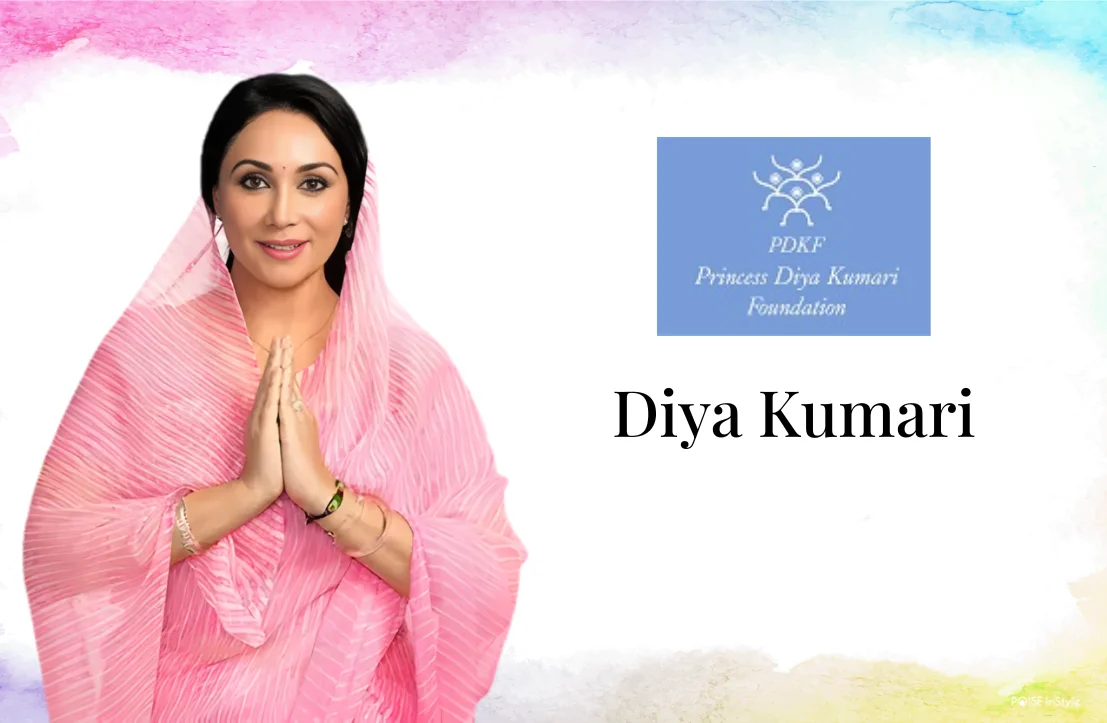
Inside the work of Princess Diya Kumari Foundation and the quiet revolution reshaping women’s lives through craft, income, and independence.
In the sun-drenched villages of Rajasthan, where heritage crafts have existed for centuries yet economic opportunities remain limited, a quiet shift is taking place. It does not announce itself loudly, nor does it rely on spectacle. Instead, it unfolds in small but powerful ways- in the confidence of women stepping into training centres, in the rhythm of hands learning new techniques, and in the steady flow of income that begins to change lives.
At the centre of this transformation is the Princess Diya Kumari Foundation (PDKF), an initiative led by Jaipur’s royal scion and Deputy Chief Minister Diya Kumari. Since its inception in 2013, the foundation has worked with over 10,000 rural women, helping them move from uncertain livelihoods to stable, skill-based income streams. What makes this effort stand out is its clarity of purpose: it is not about charity, but about creating long-term self-reliance.
Building skills where opportunity was limited
For many women in Rajasthan’s rural belts, access to education and employment has historically been constrained by both social and economic barriers. Work, if available, is often informal, low-paying, and physically demanding. In such an environment, the idea of structured skill-building becomes transformative.
PDKF addresses this gap through hands-on vocational training programmes across centres in Jaipur, Sawai Madhopur, and Rajsamand. Women between the ages of 18 and 50 enrol in focused 45-day courses where they learn traditional crafts such as gotapatti embroidery and block printing- skills deeply rooted in Rajasthan’s cultural identity.
What makes these programmes accessible is the support system built around them. Training is free, materials are provided, and participants receive stipends. This ensures that women are not forced to choose between earning a daily wage and learning a new skill. It creates a space where they can invest in their future without immediate financial pressure.
Over time, this learning process becomes more than technical training. It becomes a shift in mindset. Women begin to see themselves not just as workers, but as artisans with the ability to create value.
Turning craft into consistent income
The real strength of PDKF lies in its ability to connect skill with market access. Training alone is not enough unless it leads to income, and this is where the foundation’s model becomes particularly effective.
Artisans are linked directly to buyers through the PDKF Store and other retail channels, ensuring that their work reaches both domestic and international markets. By reducing dependence on middlemen, a significant portion of the earnings goes directly to the creators.
The difference is visible. Women who once earned modest daily wages now produce finished garments- embroidered suits, printed dupattas, handcrafted textiles- that fetch higher and more stable returns. This shift allows them to contribute meaningfully to household income, support their children’s education, and invest in better living conditions.
In many cases, artisans go a step further, forming small collectives or micro-enterprises. These groups not only increase production capacity but also create employment opportunities within their communities, extending the impact beyond individual households.
Project Pragati: From learning to leading
A key pillar of the foundation’s work is Project Pragati, which focuses on equipping women with both craft skills and business understanding. Here, the emphasis moves beyond creation to ownership.
Participants learn how to price their products, manage quality, package goods, and interact with customers. These are essential skills that allow them to operate independently rather than remain dependent on external systems.
Self-help groups (SHGs) emerge as a natural extension of this learning. Women come together to share resources, take on larger orders, and support each other through challenges. These groups often become spaces of collective growth, where economic empowerment is reinforced by emotional and social support.
What changes most visibly is confidence. Women who once hesitated to step outside their homes begin to engage with markets, participate in exhibitions, and represent their work with pride. The transformation is not just financial- it is deeply personal.
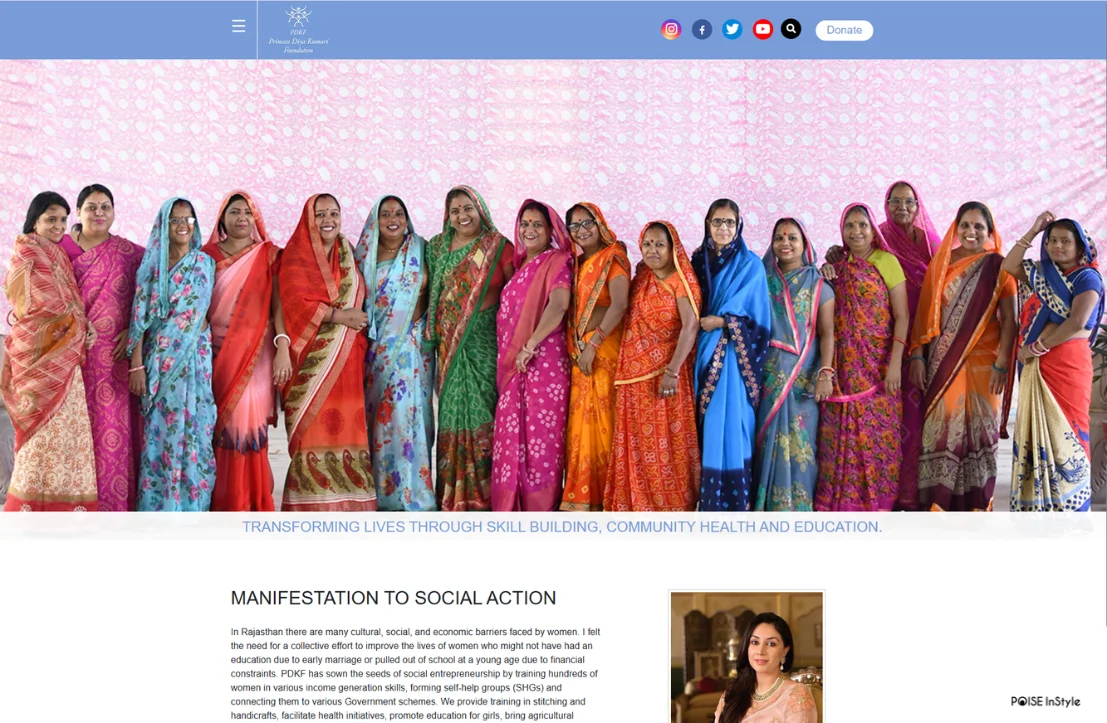
Expanding horizons with Project Shakti
Recognising that modern livelihoods require diverse skill sets, PDKF introduced Project Shakti in 2023. This initiative expands training beyond traditional crafts to include sewing, tailoring, and cosmetology.
The goal is to create multiple avenues of income. Women learn to design contemporary garments, adapt traditional techniques into modern styles, and even offer beauty services within their communities. These additional skills provide flexibility, allowing them to navigate changing market demands.
The programme also includes placement support, connecting participants with boutiques, salons, and freelance opportunities. This ensures that training translates into tangible employment outcomes, rather than remaining theoretical.
At the same time, these centres become safe spaces where women build networks, share experiences, and develop a sense of community- an often overlooked but crucial aspect of empowerment.
A holistic approach to empowerment
What sets the Princess Diya Kumari Foundation apart is its understanding that empowerment cannot be achieved through income alone. It requires a supportive ecosystem that addresses education, health, and overall well-being.
Through initiatives like Shiksha Diya, the foundation supports the education of girls, helping break cycles of limited opportunity. For many artisan families, this means a new generation gaining access to higher education and broader career paths.
Healthcare support, including regular check-ups and nutritional assistance, ensures that women can sustain their work without compromising their health. Additional programmes focusing on sports and physical activity encourage confidence and discipline among younger participants.
These layers of support create a foundation for lasting change. When women are healthy, educated, and financially independent, the impact extends beyond individuals to entire communities.
Craft as a pathway to identity and pride
One of the most meaningful outcomes of PDKF’s work is the renewed value placed on traditional crafts. Techniques like gotapatti and block printing are not just preserved- they are reimagined as viable, modern livelihoods.
For the artisans, this creates a sense of pride. Their work is no longer seen as informal labour but as skilled craftsmanship with cultural and economic value. Each piece they create carries both heritage and personal significance.
For consumers, this offers an opportunity to engage with fashion in a more conscious way. Choosing handcrafted products becomes a way of supporting real stories and real people, rather than anonymous production lines.
Wearing empowerment in everyday life
There is something powerful about wearing a garment that represents more than style. A block-printed dupatta paired with a simple outfit can bring a sense of understated elegance. A gotapatti detail on a modern silhouette can add depth and character.
These pieces do more than enhance appearance- they connect the wearer to a larger narrative of resilience and creativity. They reflect a shift towards thoughtful consumption, where fashion becomes a medium of expression and support.
A model that goes beyond numbers
By 2026, the foundation’s work has impacted thousands of women and supported the creation of numerous self-help groups. But its true success lies in the intangible changes it brings.
It is seen in the confidence of women making decisions for their families, in the reduction of migration as local opportunities grow, and in the increasing recognition of artisans as professionals.
Challenges remain, particularly in scaling operations and ensuring consistent market access. However, ongoing collaborations and strategic partnerships continue to strengthen the model.
A future shaped by skill and self-reliance
The story of the Princess Diya Kumari Foundation is not just about empowering artisans- it is about reshaping how empowerment itself is understood. It shows that sustainable change comes from building systems that enable people to stand on their own.
In Rajasthan’s villages, this change is visible in everyday moments- in the hum of activity in training centres, in the pride of completed work, and in the independence that follows.
It is a reminder that transformation does not always require grand gestures. Sometimes, it begins with a single skill, a single opportunity, and the belief that change is possible.
And from there, it grows- steadily, quietly, and powerfully.

