

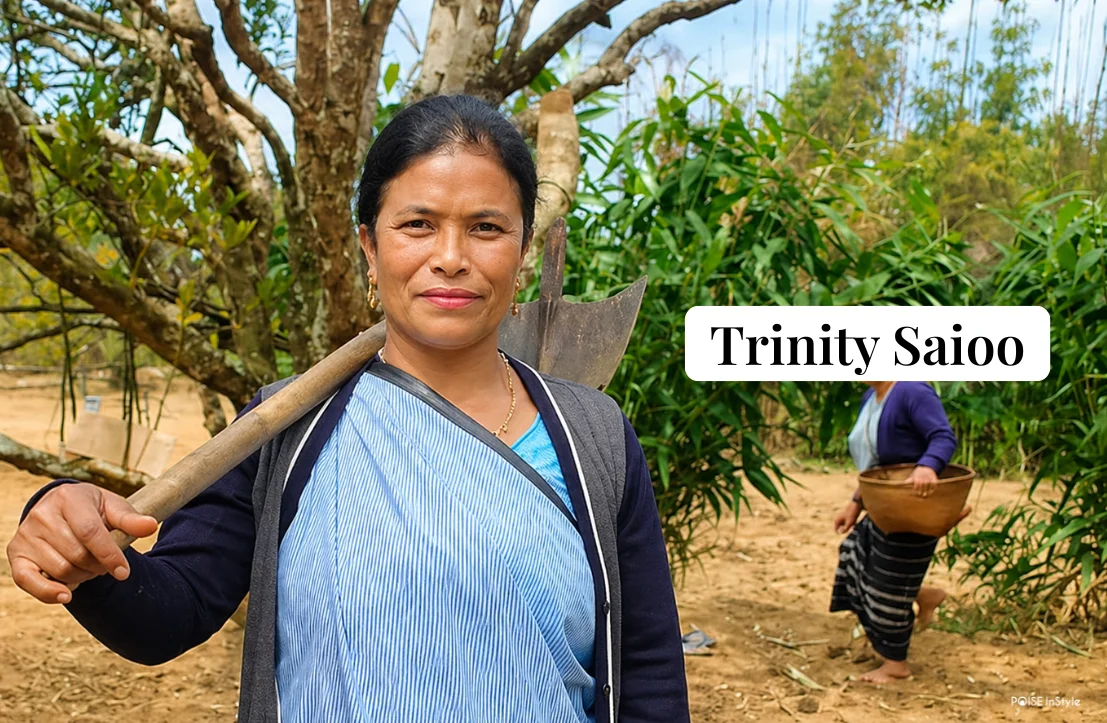
A Quiet Revolution Rooted in the Hills of Meghalaya
In the lush, rain-soaked landscapes of Meghalaya, where farming has long been a way of survival rather than prosperity, one woman quietly rewrote the rules. Trinity Saioo didn’t begin her journey as an entrepreneur or an agricultural expert. She was a school teacher- deeply connected to her community, yet aware of the silent struggles shaping it.
Her story isn’t driven by startup jargon or overnight success. Instead, it’s built on persistence, local knowledge, and a deep understanding of people. What started as a personal necessity soon grew into a powerful movement- one that transformed Lakadong turmeric into a symbol of income, identity, and independence for hundreds of women.
From Chalkboards to Cultivation: A Life-Altering Shift
Before she stepped into farming, Trinity spent her days teaching in a small village in the Jaintia Hills. But life had other plans. A sudden financial strain caused by her husband’s illness forced her to leave her job and turn toward farming to sustain her family.
At the time, agriculture in her village followed traditional jhum cultivation, a method that often resulted in low yields and declining soil health. It was labour-intensive, unpredictable, and financially unstable.
Instead of accepting these limitations, Trinity began to question them.
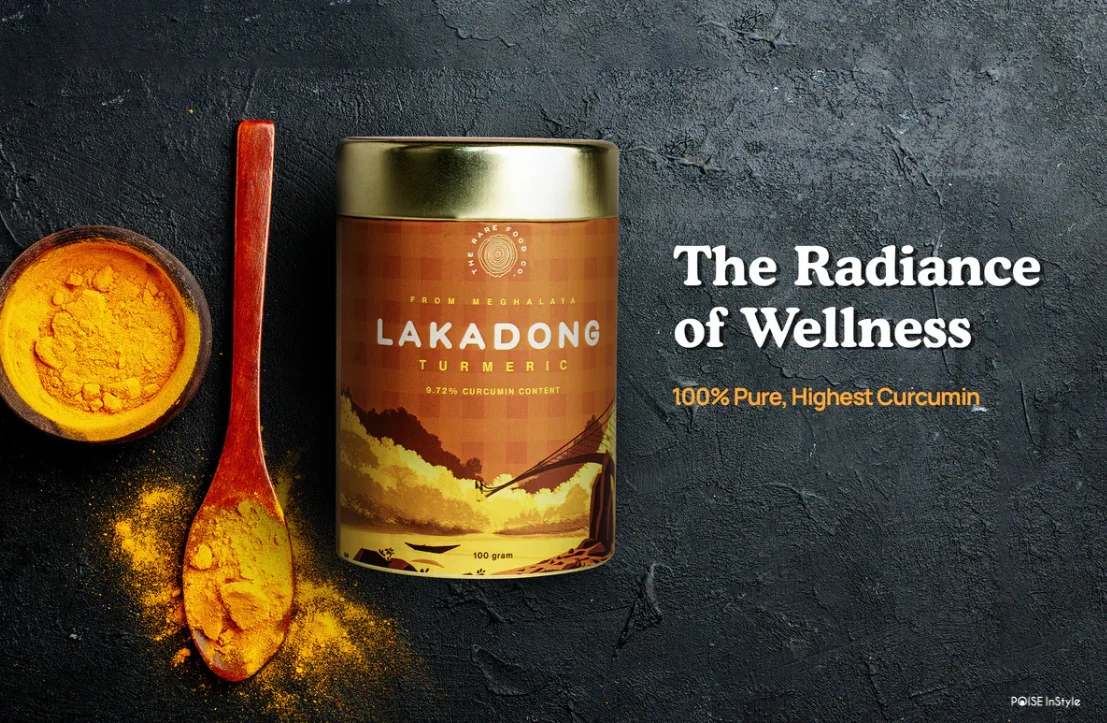
She observed closely. She experimented. And most importantly, she identified an overlooked opportunity- Lakadong turmeric, a native variety known for its exceptionally high curcumin content, making it far more valuable than regular turmeric.
What others treated as just another crop, she recognised as a premium product waiting to be positioned differently.
Discovering the Power of Lakadong Turmeric
Lakadong turmeric isn’t just special- it’s globally competitive. With curcumin levels reaching up to 9%, it holds significantly higher medicinal and commercial value than standard turmeric varieties.
But despite its potential, farmers in Meghalaya were not benefiting from it.
The reasons were simple:
- Lack of awareness about its premium positioning
- Dependence on middlemen
- Absence of processing and branding
- Limited access to larger markets
Trinity saw this gap not just as a business opportunity, but as a pathway to community transformation.
Building a Women-Led Farming Movement
Around 2010, Trinity began reaching out to women in her village. These were women who had rarely stepped into financial decision-making roles- many were homemakers, widows, or informal labourers.
Instead of scaling alone, she chose to grow collectively.
She trained them in:
- Organic farming practices
- Composting using local resources
- Natural pest management
- Crop rotation techniques
There were no large investments or institutional backing in the early days. What she had was patience, consistency, and the ability to teach- skills she carried from her classroom into the fields.
Gradually, small groups of women came together to form self-help groups (SHGs), which later evolved into structured farming collectives.
This wasn’t just about agriculture anymore. It was about ownership.
From Farming to Business: Creating a Local Value Chain
One of Trinity’s most impactful decisions was to move beyond raw production and focus on value creation.
Traditionally, farmers sold turmeric in its raw form at low prices. Trinity changed this by introducing processing at the local level.
She helped set up:
- Collection centres within villages
- Solar drying units for hygienic processing
- Grinding and packaging systems
- Basic branding initiatives
This meant that instead of selling raw turmeric cheaply, farmers could now sell processed, high-quality turmeric powder at significantly higher prices.
By connecting directly with buyers in cities like Guwahati and other urban markets, she eliminated middlemen and ensured better profit margins for farmers.
The result was a self-sustaining, circular rural economy- where production, processing, and profit all stayed within the community.
The Ripple Effect: Income, Independence, and Identity
As the model scaled, its impact became impossible to ignore.
Women who once earned minimal income began generating steady earnings. Families that relied on uncertain farming cycles found stability. Children stayed in school longer. Households invested in better living conditions.
More importantly, women gained a voice.
Financial independence translated into decision-making power- both at home and within the community.
This shift is particularly significant in a country where millions of women work in agriculture but rarely control the income they help generate.
Recognition That Followed Relentless Effort
In 2020, Trinity Saioo’s work was recognised nationally when she received the Padma Shri from Ram Nath Kovind.
The award brought attention to her work, but it didn’t change her approach.
She continued focusing on expanding the ecosystem- mentoring more farmers, strengthening supply chains, and building farmer-producer organisations.
Her initiative now supports hundreds of women and contributes to a growing turmeric economy that reaches markets beyond India.
The Challenges Behind the Success
While the outcome looks inspiring, the journey has been anything but easy.
Trinity faced multiple challenges along the way:
Climate risks
Heavy rainfall and floods often damaged crops, forcing constant adaptation in farming techniques.
Market barriers
Convincing buyers to pay premium prices for turmeric required persistent effort and education.
Gender bias
Many women lacked land ownership or access to financial resources, making participation difficult.
Funding limitations
Without large investments, growth depended on reinvestment and government support schemes.
Instead of waiting for perfect conditions, Trinity built resilience into the system- ensuring that the community could withstand disruptions and continue growing.
Scaling Beyond Turmeric: A Vision for the Future
Today, the work is expanding beyond raw turmeric production.
The next phase focuses on building a broader ecosystem that includes:
- Turmeric-based wellness products
- Herbal teas and blends
- Natural skincare formulations
- Export-ready packaged goods
The goal is clear: transform a regional agricultural strength into a global, value-driven industry.
By doing so, Trinity is not just improving incomes- she is redefining how rural businesses can scale sustainably.
What Trinity Saioo’s Journey Teaches Us About Hustle
In an era dominated by fast-paced startups and digital-first success stories, Trinity Saioo’s journey offers a refreshing perspective.
Her version of hustle is:
- Rooted in real-world problems
- Built on community, not competition
- Focused on long-term impact rather than quick wins
- Deeply connected to culture and local identity
It proves that meaningful innovation doesn’t always come from big cities or large investments. Sometimes, it begins in small villages- with observation, intent, and the courage to act.
A Legacy That Grows With Every Harvest
Today, Trinity Saioo’s work stands as a powerful example of what happens when knowledge meets purpose.
Fields that once yielded little now produce high-value crops. Women who once depended on uncertain income now run sustainable livelihoods. And a local crop has become a global opportunity.
Her story doesn’t rely on noise or hype. It stays with you because it feels grounded, honest, and deeply human.
In the hills of Meghalaya, she didn’t just grow turmeric.
She grew a movement- one that continues to empower, inspire, and prove that real change often begins quietly.

