

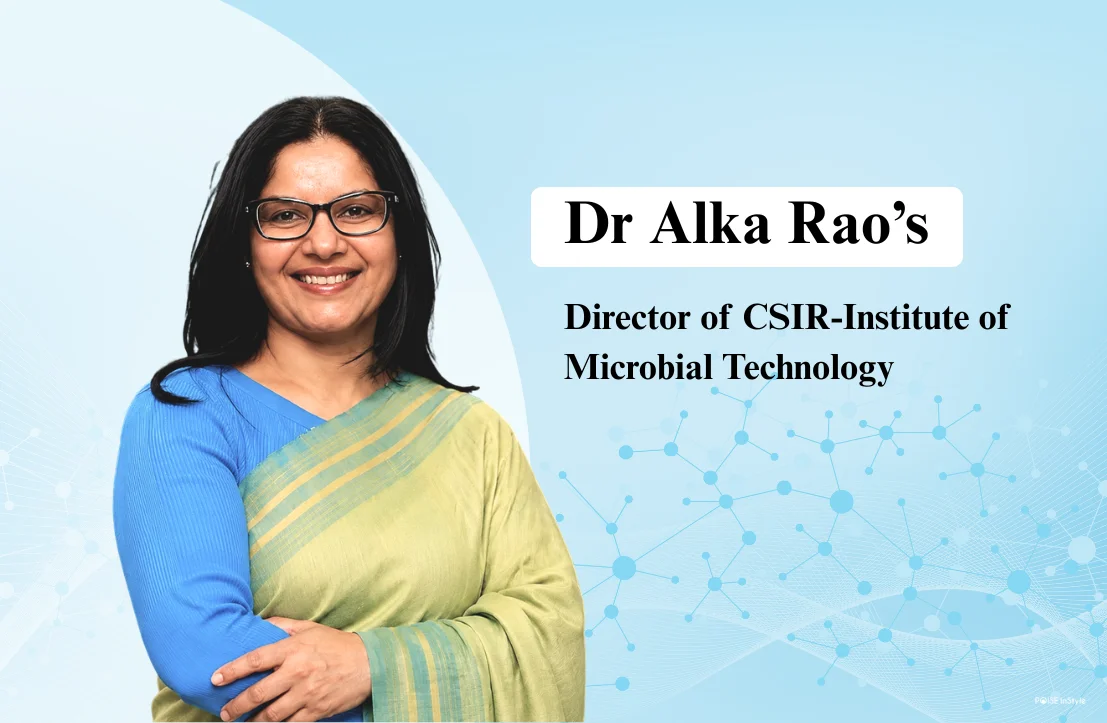
Leadership milestones often reflect larger changes taking place within society, industries, and institutions. The appointment of Dr Alka Rao as Director of CSIR-Institute of Microbial Technology (CSIR-IMTECH) is one such moment. More than a routine leadership transition, it marks a historic achievement as she becomes the first woman scientist to lead the 42-year-old institute. Her appointment represents progress not only for Indian science but also for leadership diversity, innovation, and the future of institutional excellence.
For corporate leaders, entrepreneurs, and aspiring professionals, this milestone offers valuable lessons about leadership, inclusion, and the importance of empowering talent at the highest levels.
Why Dr Alka Rao’s Appointment Matters
CSIR-IMTECH is one of India’s leading scientific institutions, playing a significant role in microbial technology research that impacts public health, biotechnology, and industrial innovation. Leadership at such an institution influences research priorities, scientific collaborations, talent development, and the translation of research into practical applications.
Dr Rao’s appointment carries importance beyond representation. It highlights how leadership roles shape the direction of innovation and demonstrates why diverse perspectives are essential for building future-ready institutions. When women occupy senior decision-making positions, they not only inspire future generations but also contribute to stronger, more inclusive leadership ecosystems.
This milestone sends a powerful message that excellence and leadership opportunities should be driven by capability, expertise, and vision.
Who Is Dr Alka Rao?
Dr Alka Rao is a distinguished molecular microbiologist and protein engineer whose expertise aligns closely with the growing demand for translational research and applied scientific innovation. Her career reflects a unique blend of scientific excellence and regulatory understanding, making her well-positioned to lead an institution focused on advancing impactful research.
Before taking charge at CSIR-IMTECH, Dr Rao served as Advisor for Science, Standards and Regulation at the Food Safety and Standards Authority of India (FSSAI). This experience gave her valuable exposure to the intersection of science, policy, compliance, and public interest.
In today’s innovation-driven economy, leaders who understand both scientific development and regulatory frameworks are increasingly important. Their ability to bridge research and implementation helps accelerate the journey from discovery to real-world impact.
Adding to her accomplishments, Dr Rao was recognized as the CSIR Women Scientist Achiever in 2023, reflecting her significant contributions to science and her growing influence within the research community.
Leadership Lessons for Corporate India
Dr Rao’s appointment offers important lessons for organizations across sectors.
The first lesson is that modern leadership requires more than technical expertise. Successful leaders must combine deep domain knowledge with strategic thinking, stakeholder management, regulatory awareness, and long-term vision. As industries become more complex and interconnected, this blend of skills is becoming increasingly valuable.
The second lesson is the importance of representation at the highest levels. Many organizations have made progress in improving diversity across their workforce, but true transformation happens when diverse talent reaches leadership positions that influence strategy, culture, budgets, and future growth.
The third lesson is about institutional credibility. When a respected scientific organization appoints a woman to its top leadership role, it signals a commitment to progress, merit, and inclusion. Such decisions strengthen trust among employees, collaborators, investors, and future talent.

The Importance of Science, Regulation, and Innovation
One of Dr Rao’s greatest strengths is her ability to connect science with regulation and industry needs. Her experience allows her to understand not only how scientific breakthroughs are developed but also how they can be scaled, regulated, and adopted successfully.
This perspective is especially valuable for sectors such as biotechnology, healthcare, food technology, diagnostics, and life sciences. Many promising innovations face challenges not because of weak science, but because they are not designed with compliance, scalability, and market adoption in mind.
Leaders who understand both technical and regulatory environments are often better equipped to guide innovation toward meaningful and sustainable outcomes.
What This Means for Women in Science
Dr Rao’s appointment is also an important milestone for women pursuing careers in science, technology, engineering, and research.
Leadership visibility matters. When women scientists see someone leading a prestigious national institution, it reinforces the belief that advancement to the highest levels is achievable. Such examples help strengthen talent pipelines and encourage more women to pursue long-term leadership aspirations.
Beyond inspiration, leadership diversity contributes to talent retention. Organizations are more likely to retain high-potential professionals when individuals can clearly see opportunities for growth and advancement within the system.
A Stronger Future Through Inclusive Leadership
Dr Alka Rao’s appointment reflects a broader shift in how institutions define leadership and success. It demonstrates that excellence and inclusion can work together to create stronger organizations, more effective innovation ecosystems, and better outcomes for society.
For corporate leaders, the message is clear: the institutions that will thrive in the future are those that embrace diverse perspectives, empower capable leaders, and create opportunities for talent to rise based on merit and impact.
As Dr Rao begins this new chapter at CSIR-IMTECH, her journey serves as a powerful reminder that true progress happens when talented individuals are given the opportunity not just to contribute to systems, but to lead them. Her appointment is not only a milestone for Indian science- it is an inspiring example of how leadership can shape the future of innovation, inclusion, and institutional excellence.

