

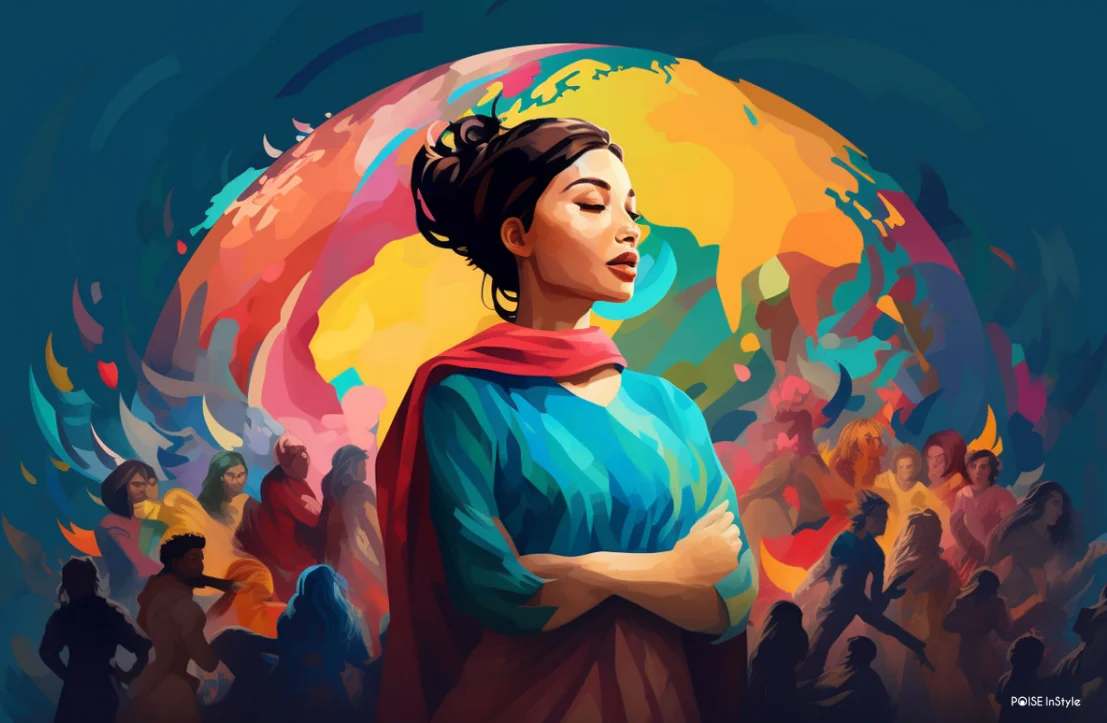
Modern art is no longer a distant, intellectual space reserved for a select few– it is becoming more personal, more emotional, and significantly more inclusive. At the heart of this transformation are women artists who are not just contributing to the art world but actively reshaping its direction. Their work is changing how we see the body, identity, culture, and even creativity itself.
For readers of POISE InStyle, especially those interested in culture, expression, and evolving narratives, this shift is more than an art movement– it’s a reflection of how modern womanhood is being redefined across industries, lifestyles, and identities.
From Margins to Mainstream: A Long-Awaited Shift
For decades, women artists were overlooked, underrepresented, or confined to niche categories within galleries and museums. Their work was often seen as secondary, even when it was groundbreaking. Today, that reality is changing in visible and meaningful ways.
Institutions like Museum of Modern Art have played a role in reshaping this narrative by highlighting the contributions of women across major art movements. What was once treated as an “addition” is now being recognized as essential. Women artists are no longer side notes in movements like Surrealism or Abstract Expressionism– they are central to understanding them.
This shift has also influenced how art is curated, studied, and consumed. Female-led exhibitions and retrospectives are not just correcting the past; they are redefining what is considered important in the present.
The Female Body, Reimagined
One of the most powerful trends in contemporary art led by women is the redefinition of the female body. But this is not about traditional beauty– it is about truth.
Artists like Jenny Saville and Alice Neel have long challenged idealized representations by portraying bodies in their most honest forms. Their work embraces imperfection– stretch marks, weight, aging, vulnerability– turning what was once hidden into something visible and valid.
This perspective has influenced a new generation of artists who approach the body not just as a physical form, but as an emotional and psychological space. Their work often blurs lines between abstraction and realism, making the viewer feel the body rather than simply observe it.
In a world driven by curated images and digital perfection, this artistic direction feels both radical and necessary. It reminds us that authenticity holds more power than perfection.
Identity, Culture, and Reclaiming Narratives
Modern women artists are also deeply engaged in exploring identity–especially where gender intersects with culture, history, and personal experience. Their work often feels layered, drawing from both individual stories and collective memory.
For instance, Citra Sasmita uses traditional Indonesian techniques to challenge patriarchal narratives and center women as powerful figures within cultural storytelling. Her work is not just visually striking– it is politically and emotionally charged.
Similarly, Jadé Fadojutimi creates expansive paintings that feel almost like emotional landscapes, blending memory, identity, and abstract expression. These works don’t offer clear answers; instead, they invite viewers to sit with complexity.
This shift toward intersectional storytelling reflects a broader cultural movement. Women are no longer simplifying themselves to fit into existing narratives– they are creating entirely new ones.
Expanding the Definition of Art
Art today is not limited to canvases and galleries, and women are at the forefront of this expansion. Many contemporary artists are experimenting with performance, digital media, and interactive installations that invite participation rather than passive viewing.
Danielle Brathwaite-Shirley, for example, creates immersive digital experiences that challenge audiences to confront uncomfortable truths about society. Her work turns viewers into participants, making the experience more personal and impactful.
At the same time, digital platforms have opened new doors. Women artists are using online spaces, virtual exhibitions, and emerging technologies to showcase their work without relying solely on traditional institutions. This shift has made art more accessible and more democratic, allowing diverse voices to be heard.
It also reflects a larger cultural reality– women today are not confined to one role. They are creators, thinkers, innovators, and storytellers, often all at once.

Personalization: Turning Accessories into Identity
One of Pipa Bella’s most powerful differentiators is its focus on customization. In an era where consumers value individuality, the brand offers ways to make jewelry more personal.
Customers can:
- Engrave names or initials
- Choose birthstones
- Mix different metals and styles
- Create customized gifting options
This transforms jewelry into more than just an accessory- it becomes a reflection of identity.
It also makes the brand highly relevant for gifting, where emotional value matters as much as design.
The Nykaa Advantage: Scaling with Precision
The acquisition by Nykaa Fashion marked a major turning point in Pipa Bella’s journey. With Nykaa’s strong ecosystem, the brand gained access to a much larger audience and better infrastructure.
This enabled:
- Wider distribution through Nykaa’s platform
- Presence on marketplaces like Myntra and Ajio
- Data-driven insights for product and trend development
The partnership allowed Pipa Bella to scale efficiently while maintaining its creative edge.
It became bigger- but not diluted.
Marketing in the Age of Content
Pipa Bella’s marketing strategy is built for the digital age. The brand understands that today’s consumers discover fashion through content-especially on platforms like Instagram and YouTube.
Its campaigns focus on:
- Influencer collaborations
- User-generated content
- Styling tutorials and reels
Trends like jewelry stacking, layering, and everyday styling have helped the brand stay visible and relevant.
Collaborations with personalities like Mallika Dua added a relatable, fun element to the brand, making it feel more like a lifestyle choice than just a product.
Pricing Strategy: Affordable Yet Aspirational
Pipa Bella operates in a price range that makes it accessible without feeling cheap. Most of its products fall between ₹500 and ₹2,000, striking a balance between affordability and perceived value.
This pricing strategy works because:
- It encourages impulse buying
- It allows customers to experiment with trends
- It fits into everyday spending habits
At the same time, the quality and design ensure that the products feel premium.
It’s about making style easy, not expensive.
Positioning in a Competitive Market
India’s fashion jewelry market is vast and diverse, with brands catering to different segments. Some focus on traditional designs, while others explore sustainability or luxury positioning.
Pipa Bella sits in a unique space.
It is:
- Trend-focused but not disposable
- Affordable but not low-quality
- Versatile enough to complement multiple styles
Compared to brands like Okhai or Omally, which emphasize craftsmanship and sustainability, Pipa Bella focuses on accessibility and everyday usability.
It doesn’t replace these brands- it complements them.
Challenges: Staying Relevant at Scale
As Pipa Bella grows, it faces challenges that come with scale.
- Managing a large and diverse product catalog
- Maintaining consistent quality across collections
- Competing with low-cost alternatives in the market
There is also increasing awareness around sustainability, which may influence consumer preferences in the future.
However, the brand’s ability to adapt quickly gives it a strong advantage.
The Road Ahead: Expanding the Ecosystem
Looking ahead, Pipa Bella has multiple avenues for growth. The brand can expand into new categories, explore global markets, and introduce more advanced personalization features.
Future opportunities include:
- Men’s accessories
- Kids’ jewelry collections
- Sustainable or lab-grown materials
- AI-driven recommendations and virtual try-ons
These innovations can further strengthen its position in the market.
Final Take: Everyday Jewelry, Reimagined
Pipa Bella’s success lies in its simplicity. It understands that modern fashion is not about rigid rules- it’s about flexibility, experimentation, and self-expression.
By offering jewelry that is stylish, affordable, and easy to wear, the brand has become a part of everyday life for many women.
In a market shaped by platforms like Nykaa Fashion, Pipa Bella has carved out a space that feels both relevant and relatable.
Because in the end, jewelry is not just about decoration-
it’s about expression.
And Pipa Bella makes that expression effortless.

