


India’s fashion industry is changing- and this time, it’s not just about trends or aesthetics. It’s about intention. More consumers today are pausing before they buy, asking where their clothes come from, how they’re made, and what impact they leave behind. In the middle of this shift, Omally has quietly built a space that feels thoughtful, relevant, and necessary.
Founded by Megha Sharma, the brand isn’t just another sustainable label trying to keep up with global trends. It’s rooted in a deeper idea- redefining how clothes are designed in the first place. Instead of adding sustainability at the end of the process, Omally builds it into the beginning. And that single difference changes everything.
The Beginning: A Question That Sparked a Brand
Omally’s story doesn’t begin with a business strategy- it begins with a realization. While studying fashion design and researching zero-waste techniques, Megha Sharma came across a fact that most people in the industry accept without question: a significant percentage of fabric in garment production is simply wasted.
For her, that wasn’t acceptable. It was an opportunity.
Instead of designing garments first and cutting fabric later, she flipped the approach. She began designing with fabric efficiency in mind- ensuring that every piece of material was used thoughtfully. That idea, while simple in theory, required a completely different design mindset.
Fashion that starts with responsibility, not excess.
That became the foundation of Omally.
A Different Way to Think About Clothing
What makes Omally stand out is not just that it is sustainable- it’s how deeply that sustainability is embedded. The brand doesn’t treat eco-consciousness as a feature or a marketing angle. It treats it as a starting point.
Every garment is designed using zero-waste pattern-making techniques. This means minimal to no fabric scraps are left behind during production. It’s a slower process, more complex than conventional methods, but the outcome is intentional and precise.
This approach naturally leads to clothing that feels different. It’s not overproduced or trend-driven. It feels considered, almost personal.
And in today’s world, that matters.
Designed for Real Life, Not Just Occasions
One of the most refreshing aspects of Omally is its understanding of how women actually live. Modern wardrobes are no longer divided into strict categories. A single day can include work, errands, social plans, and downtime—and clothing needs to keep up.
Omally designs for this reality.
Its pieces are created to transition effortlessly:
- From work meetings to evening outings
- From travel days to relaxed weekends
- From festive moments to everyday wear
This versatility is intentional. It encourages a shift from owning more clothes to owning better ones.
Fewer pieces, more possibilities.
And that’s where the brand connects deeply with its audience.
Fabric Choices That Feel Right
Sustainability at Omally goes beyond design- it extends to materials. The brand carefully selects fabrics that are not only eco-friendly but also practical for Indian conditions.
Organic cotton, for example, ensures breathability and comfort in warmer climates. Bemberg Cupro offers the feel of silk while being derived from natural sources. Peace silk provides a luxurious texture without harming silkworms.
These choices are not just ethical- they are functional.
They ensure:
- Comfort throughout the day
- Durability over time
- Better performance in everyday wear
In a market where synthetic fabrics dominate, this shift toward natural materials feels both refreshing and necessary.
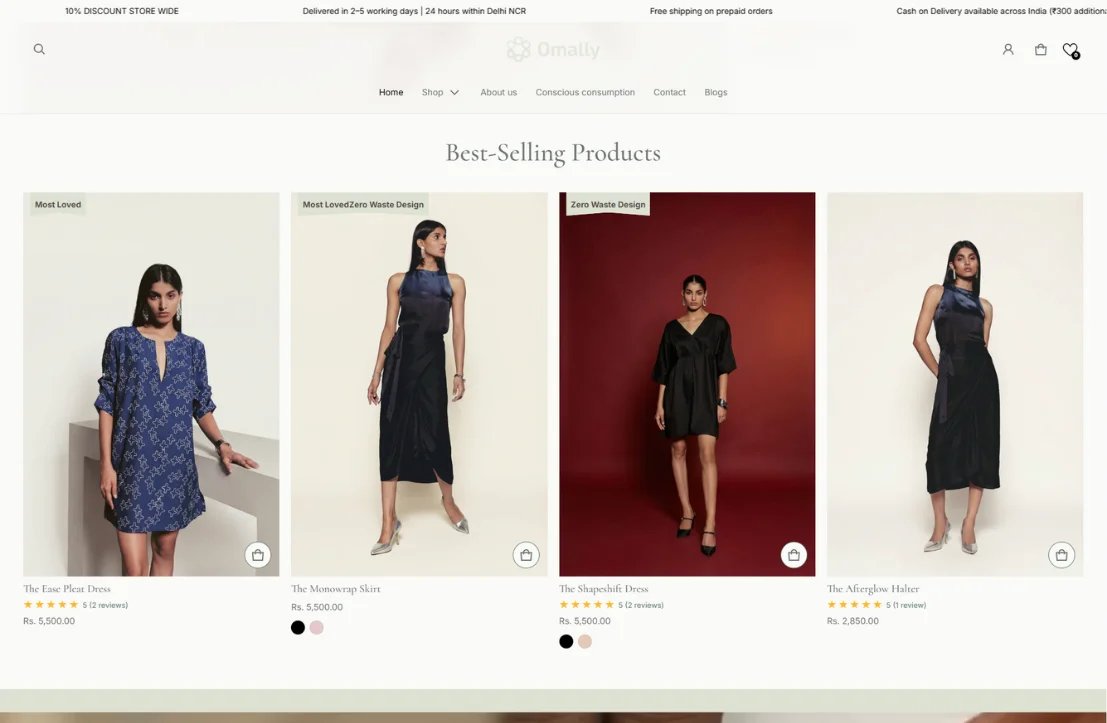
Craftsmanship That Speaks Quietly
Omally’s garments don’t rely on loud designs to stand out. Instead, they reflect a quieter kind of luxury- one that comes from craftsmanship.
Details like French seams, hand-dyed finishes, and adjustable fits may not always be visible at first glance, but they significantly enhance the overall experience. They make the garment last longer, fit better, and feel more personal.
This is where the brand differentiates itself.
It’s not fast fashion- it’s thoughtful fashion.
Building Through Community, Not Noise
Unlike many brands that rely heavily on marketing campaigns, Omally has grown through its community. Its presence on platforms like Instagram feels less like advertising and more like storytelling.
You see real people wearing the clothes. You see the process behind the products. You see conversations about conscious living.
This creates a sense of transparency.
Customers don’t just buy from Omally- they connect with it.
And in today’s market, that connection is invaluable.
Supporting Craft, Sustaining Livelihoods
Beyond design and sustainability, Omally also contributes to a larger ecosystem. The brand works closely with artisans and small production units, particularly in Delhi-NCR.
This collaboration ensures:
- Fair employment opportunities
- Preservation of traditional skills
- Ethical working conditions
In many ways, Omally is not just building a brand- it is supporting a network of people and practices that are often overlooked in fast fashion.
Growth That Feels Intentional
Omally’s growth story is not about rapid expansion- it’s about steady progress. The brand has built its presence through e-commerce, curated pop-ups, and gradual entry into offline retail.
This approach allows it to maintain quality and consistency.
It also reinforces a key idea:
Not all growth needs to be fast. Some growth needs to be right.
Finding Its Place in a Changing Market
The sustainable fashion space in India is still evolving. Brands like No Nasties and Nicobar have established themselves, while others explore new directions.
Omally sits in a unique position.
It is:
- More design-focused than basic sustainable brands
- More versatile than occasion-driven labels
- More intentional than fast fashion alternatives
It doesn’t compete on price or speed. It competes on meaning.
Challenges That Come with Purpose
Building a sustainable brand is not without its challenges. Ethical sourcing, handcrafted processes, and high-quality materials naturally increase costs. This often makes pricing a concern for consumers.
There is also the challenge of awareness.
Sustainable fashion requires a shift in mindset- from frequent buying to thoughtful purchasing. And that shift doesn’t happen overnight.
But brands like Omally are slowly driving that change.
The Road Ahead
Looking ahead, Omally’s journey is filled with potential. The brand is expected to expand its retail presence, strengthen its digital ecosystem, and explore new categories.
There is also room for innovation in:
- Sustainable fabric development
- Custom-fit solutions
- Supply chain transparency
But through all of this, one thing remains clear- the brand’s commitment to its core philosophy.
Final Take: Fashion That Feels Right
Omally stands out because it represents a different way of thinking about fashion. It challenges the idea that clothes need to be fast, disposable, or excessive. Instead, it offers something more meaningful.
Much like Ed-a-Mamma brought conscious choices into kidswear, Omally is bringing that same awareness into women’s fashion.
And that’s what makes it important.
Because the future of fashion isn’t just about what we wear-
it’s about how we choose to wear it.

