


With Nandita Sinha coming on board as the new CEO, India’s quick-commerce race has a fresh leadership narrative to follow. Instamart has named her to succeed Amitesh Jha in the top job, with Sinha taking the reins from August 3, 2026.
It is a move that goes beyond the usual change of guard. In a market where competition is heating up and firms are as concerned with profitability and operational rigour as they are with expansion, her arrival at this juncture is no accident. For those in the industry, be they entrepreneurs or consumers, it is an indication of how Instamart intends to write the next chapter of its story in one of the country’s most dynamic digital spaces.
A Proven Consumer Internet Leader Takes Charge
Sinha comes to Instamart by way of Myntra, where she was instrumental in putting one of India’s premier fashion e-commerce platforms in good standing. She is a consumer internet veteran with over 20 years in the field, having held positions of note at some of the more respected names in Indian business.
Her resume includes:
- Hindustan Unilever, the start of her career, where she honed her skills in business strategy and consumer marketing.
- Britannia, in brand and marketing leadership.
- Flipkart, overseeing the likes of fashion, lifestyle and key merchandising categories.
Put together, it is a blend of retail, digital and FMCG know-how that makes her one of the most seasoned leaders to run a quick-commerce operation. Sriharsha Majety, CEO of the Swiggy Group, put it plainly, calling her “one of India’s most accomplished consumer internet leaders” for her customer focus and ability to put in place scalable businesses.
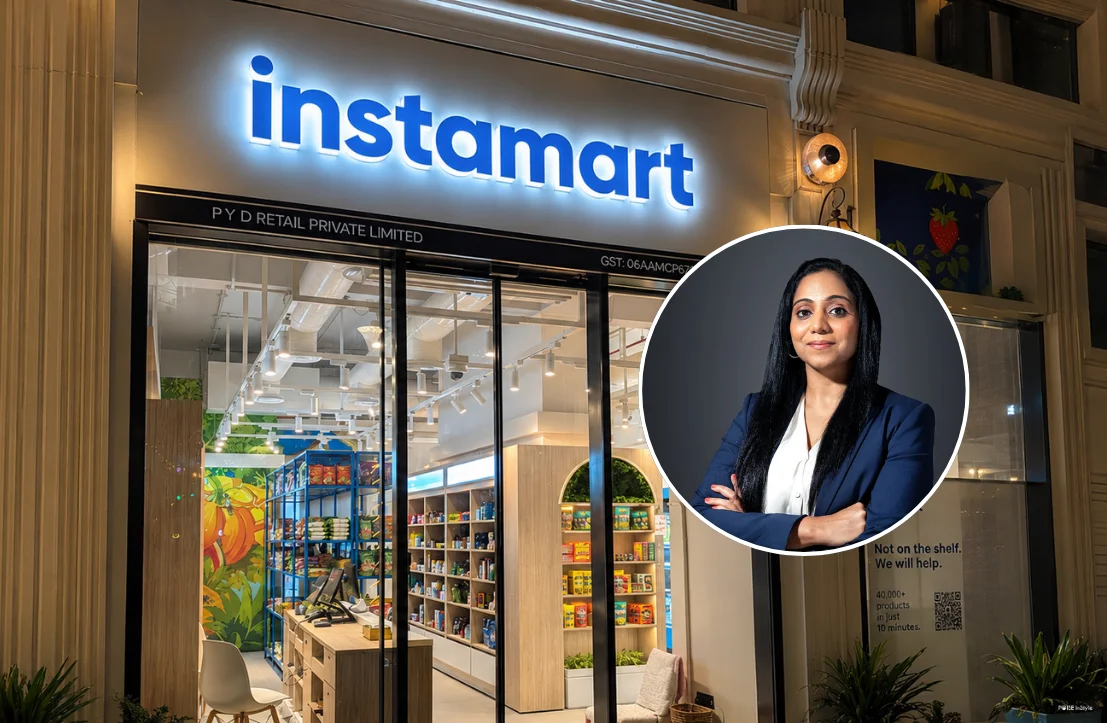
What Nandita Sinha’s Leadership Means for Instamart
In what is becoming an increasingly cut-throat environment, Sinha will have her work cut out for her in driving the company forward. Her watch list is expected to include a differentiated assortment strategy; the idea is to give customers a product range that sets Instamart apart from the rest.
There will also be a disciplined eye on growth. As the sector in India changes shape, scaling with efficiency is as vital as speed. Profitability will be high on the agenda as well. The company is set to improve its unit economics without skimping on the investment needed for service quality and to win over new customers.
Operational excellence is another given. One can expect further spending on everything from inventory optimisation and supply chain to last-mile delivery. And at the centre of it all will be the customer experience; building loyalty and reliable service is part of the long-term plan.
What This Leadership Change Means for India’s Quick Commerce Industry
This is a defining time for quick commerce in India. The days of competing on delivery times alone are over; now it is about trust, product availability and financial discipline. Consumer demands for a seamless, convenient shop have never been higher.
Jha, who was at the helm since August 2024, has moved on. His replacement with someone of Sinha’s calibre, having steered a giant like Myntra, is perhaps the most conspicuous leadership shift in the consumer internet ecosystem of late.
For Instamart, it is a statement of intent: to get the business right across the board while charting a course for profitable expansion. For the consumer, it should mean a smarter selection and better service. For the wider industry, it underlines the value of experience in a landscape that is evolving at pace.

