


Inside Carmesi and how it’s quietly changing how Indian women approach comfort, sustainability, and self-care
For years, menstrual care in India lived in the background- something functional, rarely discussed, and almost never questioned. Most women grew up using whatever was available, often ignoring discomfort as an unavoidable part of their monthly cycle. But today, a noticeable shift is underway. Conversations around periods are becoming more open, and women are beginning to treat menstrual care as an extension of overall wellness.
At the heart of this shift is Carmesi, a brand that has moved beyond simply selling sanitary products to influencing how women think about what touches their bodies. Founded in 2017 by Tanvi Johri, Carmesi introduced a perspective that feels obvious in hindsight but was largely overlooked earlier- period care should be as thoughtful, safe, and comfortable as skincare.
The discomfort women silently accepted
Before Carmesi entered the picture, many women experienced issues like rashes, itching, and irritation during their periods but rarely questioned the cause. These discomforts were often dismissed as “normal,” something to endure rather than address.
Tanvi Johri saw this differently. After speaking with thousands of women, she realised that the problem wasn’t menstruation itself but the products being used. Most conventional pads relied heavily on synthetic materials that trap heat and moisture, creating an environment that can irritate sensitive skin.
This insight became the foundation of Carmesi. The brand was built around a simple idea—if menstrual products come in direct contact with the body for hours, they should be designed with care, not compromise.
A material shift that changed the experience
One of Carmesi’s most defining innovations lies in its choice of materials. Instead of the plastic-heavy top layers found in many mainstream sanitary pads, the brand introduced a corn-based, biodegradable top sheet designed to feel softer and more breathable.
This difference is not just technical- it is experiential. A breathable surface allows better airflow, reducing moisture build-up and, in turn, minimising the chances of rashes or discomfort. For many women, this translates into a noticeably more comfortable period.
At the same time, the biodegradable aspect reflects a growing awareness around environmental impact. Traditional sanitary pads contribute significantly to non-biodegradable waste, often taking centuries to decompose. Carmesi’s approach signals a move toward more responsible consumption, even in categories that were previously ignored in sustainability conversations.
From necessity to self-care
What truly sets Carmesi apart is how it positions menstrual care within the broader idea of lifestyle habits.
Today’s urban consumers are increasingly mindful of what they use-whether it’s skincare, food, or fitness routines. This awareness is now extending to menstrual products. Women are asking questions about ingredients, materials, and long-term effects on their bodies.
Carmesi fits seamlessly into this mindset. It encourages women to see period care not as a hidden chore but as part of their self-care routine. Choosing a gentler, more breathable product becomes an act of paying attention to one’s body.
This shift transforms a monthly necessity into a conscious habit- one that reflects both personal comfort and informed decision-making.
Building a wider personal-care ecosystem
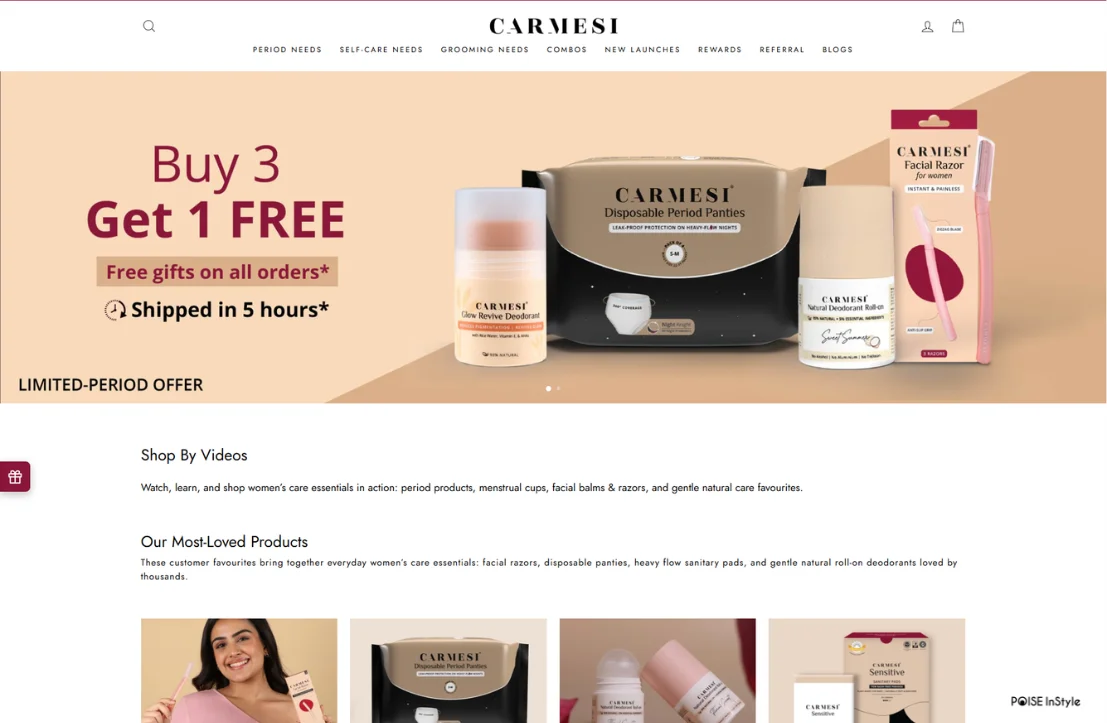
While menstrual care remains its core, Carmesi has gradually expanded into a broader range of products that align with its philosophy. From disposable period panties to intimate-care solutions and grooming essentials, the brand reflects a more holistic approach to personal care.
This expansion mirrors how modern consumers view hygiene and wellness—not as separate categories, but as interconnected parts of daily life. The same person who chooses a gentle face cleanser is likely to look for a skin-friendly menstrual product.
By maintaining consistency in values across its offerings, Carmesi has created a brand ecosystem that feels cohesive and trustworthy. It is no longer just about periods; it is about overall comfort and care.
Changing how periods are talked about
Another important shift brought by Carmesi lies in its communication. For decades, menstrual care advertising in India relied on indirect language and visual metaphors, often avoiding real conversations about discomfort or bodily experiences.
Carmesi takes a more honest approach. It talks openly about rashes, sensitivity, and comfort, treating menstruation as a natural biological process rather than something to be concealed.
This transparency resonates strongly with younger audiences, particularly millennials and Gen Z, who value authenticity in the brands they engage with. It also helps normalise conversations that were once considered uncomfortable, making it easier for women to express their needs and concerns.
The influence of conscious consumption
Carmesi’s rise is closely tied to a larger cultural shift toward conscious consumption. More consumers today are evaluating products not just on performance, but on their impact- both on the body and the environment.
Menstrual care, once overlooked in this context, is now being reconsidered. Women are becoming more aware of the materials used in sanitary products and the long-term implications of repeated use.
Choosing a biodegradable, skin-friendly pad becomes part of a larger lifestyle philosophy- one that values health, comfort, and sustainability. Over time, these small choices accumulate, shaping broader habits and expectations.
A quiet shift in everyday habits
The impact of Carmesi is not dramatic or immediate. It unfolds gradually, through everyday decisions. A woman switching to a more breathable pad, noticing less irritation, and continuing that choice month after month- this is where real change happens.
These shifts also influence how future products are designed. As more consumers demand comfort and transparency, the industry is likely to respond with better materials and more thoughtful innovation.
In this way, Carmesi is not just participating in the market- it is influencing its direction.
More than a product, a perspective
At its core, Carmesi represents a change in perspective. It encourages women to question what they use, to prioritise comfort, and to treat their bodies with greater awareness.
It also highlights an important idea- self-care is not limited to visible routines like skincare or fitness. It extends to everyday choices that may not be seen but are deeply felt.
Menstrual care, once hidden and overlooked, is now becoming part of that conversation.
The future of period wellness
As awareness continues to grow, the future of menstrual care in India is likely to become more nuanced. Products will not just compete on absorbency or pricing, but on comfort, safety, and sustainability.
Brands that understand this shift will shape the next phase of the category. Carmesi’s journey shows that there is space for innovation that is both practical and thoughtful.
A lifestyle shift, one cycle at a time
Carmesi’s story is not just about sanitary pads. It is about how small, consistent choices can lead to larger changes in mindset.
By encouraging women to pay attention to their bodies and make informed decisions, the brand has turned a routine necessity into a meaningful part of daily life.
And in doing so, it has quietly changed how a generation approaches something as fundamental as their monthly cycle- making it less about endurance and more about comfort, care, and confidence.

