

India’s digital economy is at an inflection point. With over 900 million internet users and one of the fastest-growing startup ecosystems globally, the country is rapidly becoming a hub for artificial intelligence (AI) innovation. Yet, as businesses rush to adopt AI, a critical question emerges: What truly defines an AI-first organisation?
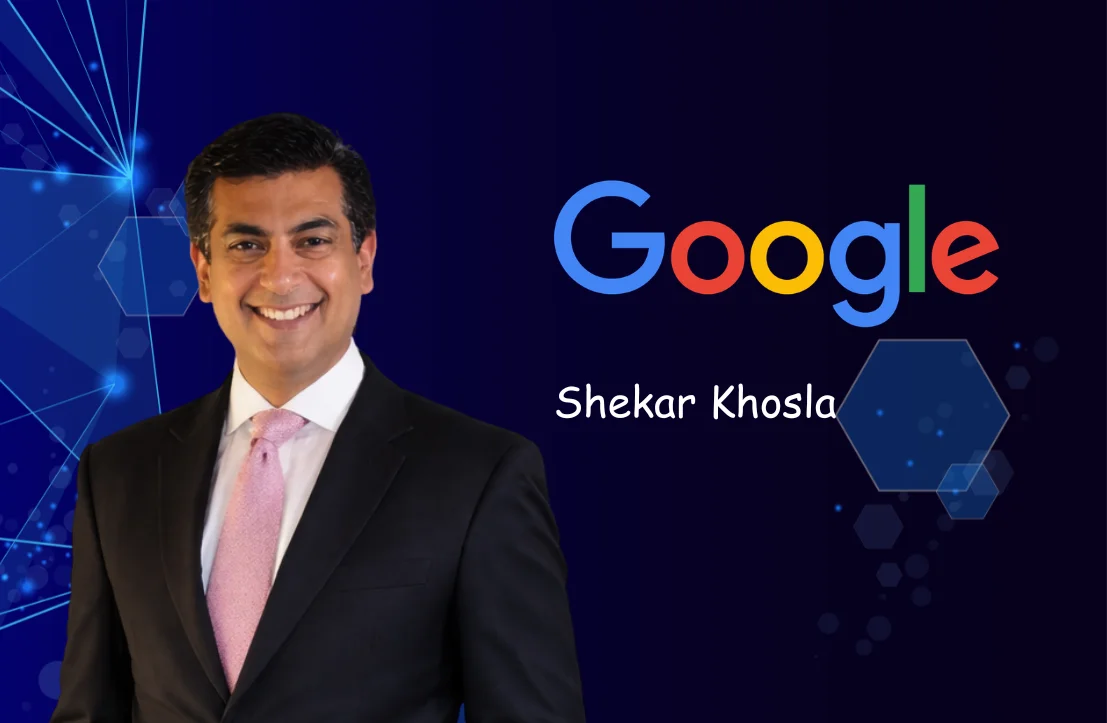
According to Shekar Khosla, Vice President of Marketing at Google India, the answer isn’t rooted in technology-it begins with people.
In an era where AI tools promise efficiency, scale, and automation, Khosla’s perspective stands out. He believes that the real transformation lies in building a people-first culture that embraces AI as an enabler, not a disruptor. His approach offers a powerful blueprint for CMOs, founders, and business leaders navigating India’s AI-driven future.
Why AI-First Organisations Need a People-First Mindset
Many companies mistakenly equate AI transformation with tool adoption—integrating automation platforms, deploying machine learning models, or upgrading martech stacks. However, Khosla emphasizes that simply layering AI onto existing systems leads to limited impact.
Instead, building an AI-first organisation requires:
- Cultural transformation
- Leadership alignment
- Employee empowerment
- Continuous learning
At Google India, this shift started with a simple yet powerful idea: AI should amplify human potential, not replace it.
This mindset is particularly relevant in India, where diverse markets, languages, and consumer behaviors demand empathy-driven marketing. AI can scale personalization, but only humans can define purpose and context.
The Internal Shift: Turning AI Anxiety into Empowerment
One of the biggest barriers to AI adoption isn’t technical-it’s psychological.
When Google India began integrating AI into its marketing workflows, teams initially feared job displacement. Khosla and his leadership team addressed this head-on by reframing AI as a productivity partner.
1. Leadership-Led Adoption
Executives actively demonstrated how AI tools could simplify everyday tasks—from campaign planning to performance analysis. This top-down approach built trust and credibility.
2. AI Squads and Peer Learning
Google introduced “AI Squads”—groups of early adopters who experimented with tools and shared real-world success stories. These sessions created a ripple effect, transforming skepticism into curiosity.
3. Gamification Through AI Leaderboards
To drive engagement, teams competed on an internal “AI Leaderboard,” earning recognition for innovative use cases such as:
- Automating reporting workflows
- Generating creative assets
- Extracting insights from large datasets
This not only encouraged experimentation but also normalized AI usage across teams.
4. Personalized Training Programs
Recognizing that one-size-fits-all training doesn’t work, Google tailored AI learning sessions specifically for marketers. Tools like Google Pencil Pro, an AI-powered creative generator, became central to this transformation.
For example, the Google Play team reduced creative production timelines from days to hours—unlocking more time for strategic thinking.
The Impact: A Shift in Perception
The results of this internal transformation were significant.
A Google-Kantar study conducted in India revealed that 68% of users now perceive AI as an enabler rather than a threat. This shift in mindset directly correlates with higher productivity, faster innovation cycles, and stronger employee engagement.
Key Takeaway for Leaders
If you want to build an AI-first organisation:
- Start with small pilot programs
- Celebrate early wins
- Encourage peer-driven learning
- Invest in role-specific training
In resource-conscious environments like India, this approach delivers high ROI without requiring massive infrastructure investments.
The Customer Experience Shift: Hyper-Personalization at Scale
Once internal adoption gains momentum, the next step is transforming customer experiences.
India’s diversity—spanning languages, cultures, and regional preferences—makes personalization both a challenge and an opportunity. AI bridges this gap by enabling real-time, hyper-personalized marketing.
Agentic AI: The Future of Marketing
Google India is leveraging agentic AI workflows-autonomous systems that:
- Analyze audience data
- Generate content
- Test variations
- Optimize campaigns in real time
This allows brands to move from static campaigns to dynamic, adaptive marketing ecosystems.
Case Study: ICC Women’s Cricket World Cup Campaign
A standout example of AI-driven marketing innovation was Google India’s campaign during the ICC Women’s Cricket World Cup.
In a “Social Pulse Room,” AI agents processed thousands of real-time signals, including:
- Audience sentiment
- Regional preferences
- Match moments
What AI Enabled:
- Creation of localized content in multiple languages
- Segmentation of audiences (die-hard fans vs casual viewers)
- Rapid deployment of relevant creatives within 90 minutes
For instance:
- Hindi-speaking audiences received high-energy, culturally relevant content
- Tamil audiences saw region-specific narratives aligned with local fandom
The result? Significantly higher engagement and deeper emotional connection with audiences.
What This Means for Indian Brands
AI-powered personalization is no longer optional—it’s a competitive advantage.
Leading Indian companies like Flipkart and Zomato are already leveraging AI for:
- Festive campaign optimization
- Dynamic ad creatives
- Real-time customer engagement
Actionable Insights for CMOs
- Integrate AI into platforms like Google Ads and Performance Max
- Use AI for A/B testing at scale
- Focus on regional and cultural personalization
- Measure performance through engagement and conversion uplift
Brands that adopt these strategies often see 20–30% higher click-through rates, proving the tangible impact of AI-driven marketing.
The Ecosystem Shift: Building AI Literacy at Scale
Khosla believes that no organisation can succeed in isolation. To truly become AI-first, businesses must contribute to a larger ecosystem of learning and innovation.
Google India’s AI Initiatives
1. AI Skills House
Google aims to train 10 million Indians through free AI courses. So far:
- 1.5 million users have participated
- 3,000+ modules are available
- Topics include prompt engineering, ethical AI, and real-world applications
2. Industry Partnerships
Collaborations with organizations like Reliance Intelligence provide students with access to advanced AI tools, fostering early adoption.
3. Campus Ambassador Programs
Google has trained over 3,000 student ambassadors, equipping them to drive AI adoption across universities.
Participants in these programs are reportedly 40% more likely to innovate during internships, highlighting the long-term impact of AI literacy.
AI and India’s Tech Ecosystem
India’s AI growth is further supported by national initiatives such as the India AI Mission, backed by $1.25 billion in funding. This positions India as a global leader in AI innovation.
For startups and enterprises alike, this creates opportunities to:
- Build AI-native products
- Enhance customer experiences
- Scale operations efficiently
For women entrepreneurs and underrepresented groups, AI literacy programs are also helping bridge gaps in access and opportunity—driving more inclusive growth.
The Leadership Imperative: Are You Ready for AI-First?
As AI continues to redefine industries, the role of leadership becomes more critical than ever.
Khosla’s message to CMOs and business leaders is clear:
Technology is ready. The real question is—are your people ready?
Building an AI-First Organisation: A Practical Framework
1. Start with Culture
Create an environment where experimentation is encouraged and failure is seen as a learning opportunity.
2. Invest in People
Upskill teams with role-specific AI training and continuous learning programs.
3. Enable Collaboration
Foster cross-functional teams to drive innovation and share knowledge.
4. Adopt Agentic Systems
Leverage AI to automate, optimize, and personalize at scale.
5. Think Ecosystem-Wide
Collaborate with industry partners, startups, and educational institutions.
The Future of Marketing in an AI-First World
AI is not just transforming marketing-it’s redefining it.
From content creation to customer engagement, the entire marketing funnel is becoming more intelligent, adaptive, and data-driven. Yet, as Khosla emphasizes, the heart of marketing remains unchanged:
Connecting with people.
AI enhances this connection by enabling:
- Deeper insights
- Faster execution
- Greater personalization
But the emotional intelligence behind these interactions still comes from humans.
Conclusion: Start with People, Scale with AI
Google India’s journey offers a powerful lesson for organisations across industries: AI transformation is not a technology project-it’s a people movement.
By prioritizing culture, empowering teams, and investing in ecosystem-wide learning, businesses can unlock the true potential of AI.
As India moves toward a projected $1 trillion digital economy by 2028, the organisations that lead will not be the ones with the most advanced tools—but the ones with the most empowered people.
The future of AI-first organisations starts here.
And it starts with people.

