

A Small-Town Dream That Challenged Expectations
There is a certain image that comes to mind for many when they consider the head of Chanel: a figure who has made a life of it in Parisian ateliers and on the runways of haute couture over the course of decades.
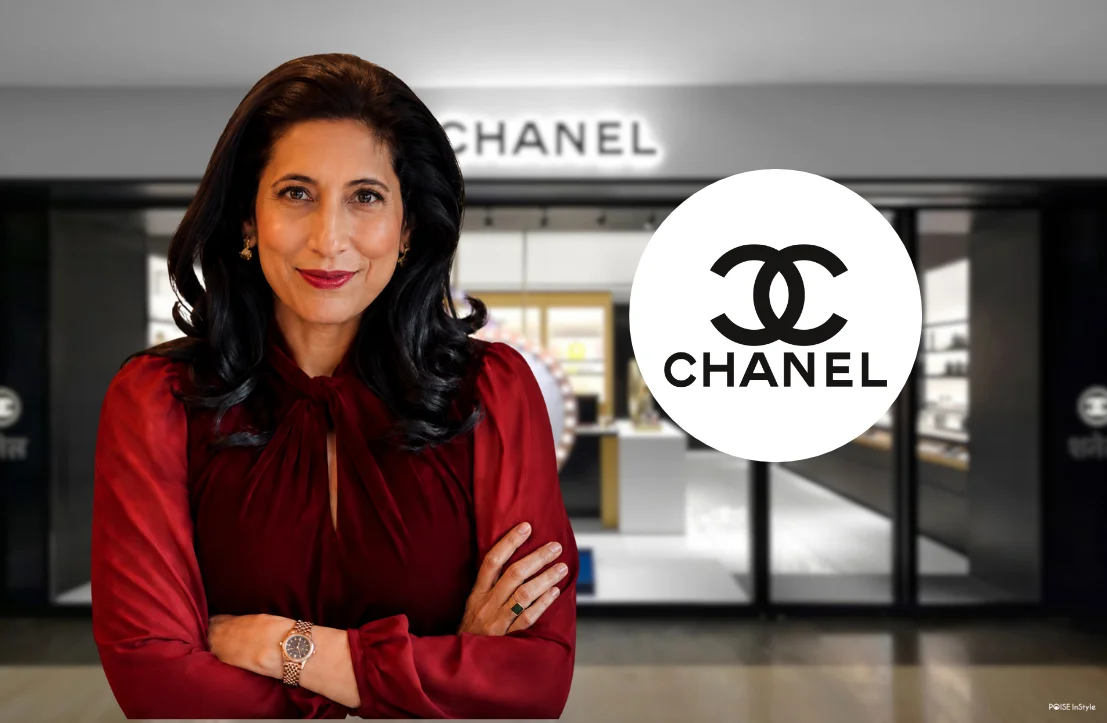
Leena Nair does not fit that mould.
Her story is one of contrasts. Hailing from a traditional home in Kolhapur, Maharashtra, she was raised with the understanding that a girl’s place was in marriage at a young age, not in the corporate world. Now she is at the helm of Chanel, a brand worth some $60 billion and among the most recognisable in the world. In doing so, she has shown how purpose and empathy can carry one from a small town in India to the very top of global commerce.
More than just an individual triumph, her trajectory offers a kind of blueprint for those who hold to the view that talent, not pedigree, is what matters.
From Kolhapur to the Boardroom
As the first woman in her family to go on for higher education, 1969-born Leena Nair had the backing of her father, though he did have the expectation that she would be wed by 23. She gave him his way but harboured ambitions well beyond what society might have dictated.
After an engineering degree she put in the work to get an MBA from XLRI Jamshedpur. It was a move that would set the stage for a career destined to make an impression on professionals everywhere.
The Factory Floor That Shaped Her Leadership
When she came on board with Hindustan Unilever in 1992 as a management trainee, she did not take up a desk in a corporate office like so many of her peers. Instead, she was out on the manufacturing floor in remote towns, running factories and putting in night shifts with the frontline staff.
It was hard work and hardly glamorous, but it proved to be the best kind of classroom. Dealing with employees at every level instilled in her a resilience and an ability to listen before she led. That people-first approach has been the cornerstone of her style ever since.
Breaking Barriers During Three Decades at Unilever
For thirty years she worked her way up Unilever’s ranks and in the process put an end to a few old conventions. She was the first female manager to put her name forward for a factory posting and the first to do a night shift there. In 2016 she made history as the first woman in the company’s 90-year existence to sit on the Management Committee.
That same year saw her named Chief Human Resources Officer. It was a historic appointment on several counts: the first time an Asian, a woman, or anyone so young had held the post. For the next few years she would be responsible for the people strategy of 160,000 staff in 190 countries, from talent and culture to sustainability.
Building a People-First Leadership Philosophy
Nair had a way of making the human element the focus of organisational success. Under her watch at Unilever, the proportion of female managers was brought up to 50 per cent from 38. She also pushed to streamline systems in favour of trust and accountability and helped the firm pledge living wages for its supply chain by 2030. Her philosophy was simple: if you invest in your people, the business will perform better.
Making History as Chanel’s Global CEO
Then in January 2022, the world took notice when she was made Global CEO of Chanel. Some were taken aback given she had no prior CEO title and no background in luxury fashion. But the owners of Chanel were interested in something other than industry credentials. The company was in need of a leader who could honour its heritage and at the same time set it on a course for the future. In Leena they found that person. With her track record of scaling complex organisations, building global teams and leading with intent, she was the obvious choice.
In doing so, she made history as the first Indian, the first woman and the first person of colour to put her name to the helm of the iconic French luxury house.
Listening Before Leading
Leena did not come in and make changes right away. For her first few months she wanted to get to know the organisation from within. That meant travelling to 25 offices, 100 retail boutiques and 40 manufacturing sites. But more than anything, she made time to talk to everyone in her path, senior executives and retail associates down to the seamstresses and artisans.
“Seek to understand before you seek to change,” was her simple philosophy. It was an approach of listening first that would go on to inform Chanel’s next chapter of growth.
Transforming Chanel with Purpose and Performance
Even as she safeguarded the brand’s legacy, Leena put in place some very deliberate strategic moves.
On the sustainability front, she gave the agenda new impetus with the No.1 de Chanel beauty line, an environmentally responsible innovation that underpinned the company’s climate and supply chain pledges. To maintain the brand’s premium feel in a market where luxury is more accessible, she rolled out invite-only boutique experiences to preserve a sense of exclusivity.
Her people-first way of doing things has proven good for business as well. Under her watch, 2022 saw revenue hit a record $17.2 billion, up 17 per cent. The following year sales were up another 16 per cent, nearing $20 billion on the back of strong showings in key categories. Leena has shown there is no contradiction between commercial success and purpose-driven leadership.
The results are evident in other ways too. Women now occupy 60 per cent of leadership roles at Chanel. And via Foundation Chanel, annual funding has been raised from some $20 million to in excess of $100 million to back education, cultural and community programmes in over 50 countries.
Becoming a Global Voice for Women in Leadership
Outside of the boardroom, Leena has put herself forward as an advocate for women in leadership. She is candid about the realities of imposter syndrome and unconscious bias, or the particular expectations heaped on women in senior posts. But she is not interested in being “the first” for its own sake; she wants to open the door for others. Her aim is to normalise women in leadership to the point where it is hardly worth making news of.
She calls her own career trajectory a “quadruple jump” – from an Anglo-Dutch multinational to a French heritage brand, from consumer goods to luxury fashion, from CHRO to CEO of a private enterprise. Yet one thing has not changed: her belief in the “human spark” of trust and shared purpose that makes for effective leadership.
Leadership Lessons from Leena Nair’s Extraordinary Journey
There is much to be learned from Leena Nair’s story that has nothing to do with luxury fashion. It is proof that empathy can give you an edge and that an unorthodox path can yield extraordinary outcomes. From the factory floors of India to the top of one of the world’s most revered brands, she has redefined 21st century leadership. It is a reminder that your start in life does not dictate your success; what matters is the willingness to keep growing and to have faith in possibilities the world may not see coming.

