

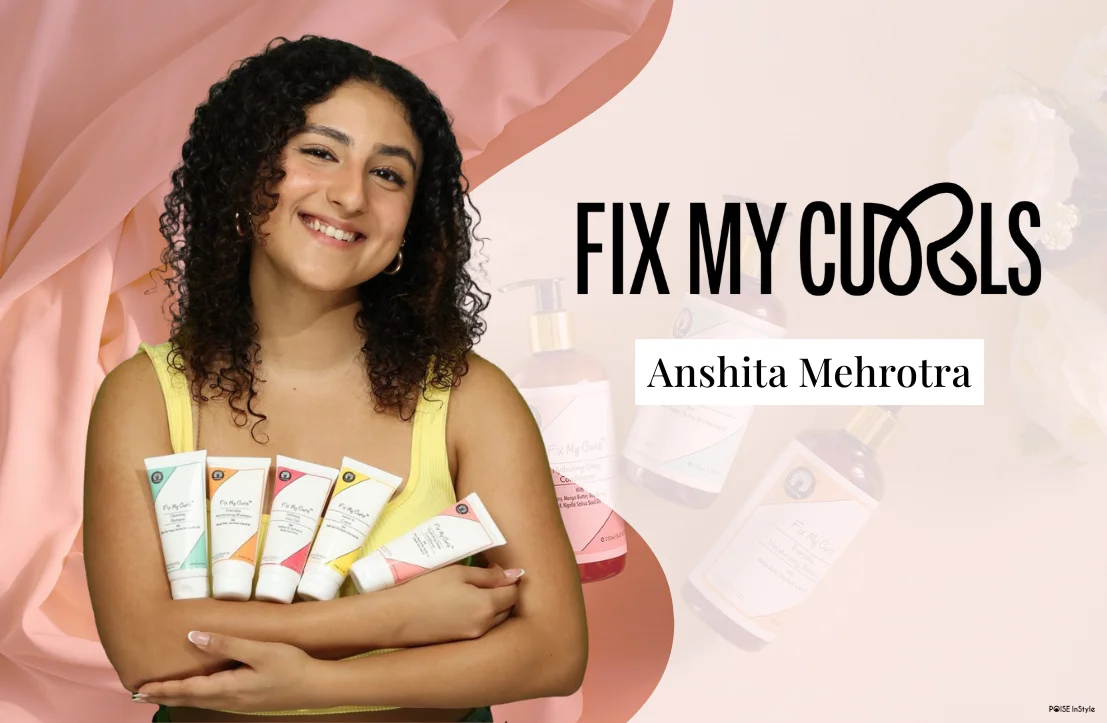
One young entrepreneur’s path from a personal hair problem to one of India’s most rapidly expanding curly hair brands
A good business is born out of necessity. The ones you remember are those where the founder has had to deal with that necessity in their own life. In the case of Anshita Mehrotra, the issue at hand was her curly hair.
As a child in India, she was subjected to the sort of advice that many with textured hair still get today: straighten it, smoothen it, put it in its place. Curly hair was not so much celebrated as it was seen as something requiring a “fix.” Rather than being taught to look after her natural curls, Anshita did what millions of others do; she put down products made for straight hair and submitted to treatments that were sold on the promise of being manageable but in reality were damaging over time.
That very private frustration would in time become Fix My Curls, a multi-crore D2C operation and one of the country’s best known names in curly hair care. It is more than a beauty industry success; it is an example of how to spot an overlooked market and make an entrepreneurial opportunity out of one’s own experience.
The Industry’s Blind Spot
Anshita set out to do more than put another brand on the shelf. She wanted to address a problem that millions in India had come to terms with. For all the wavy, coily and curly hair in the country, the beauty sector was intent on catering to the straight-haired. You could find salon services to chemically alter your natural texture or store-bought items for smoother hair, but little else.
When Anshita did want something that worked, it meant ordering from pricey international labels and waiting weeks for delivery. One such wait prompted her mother to put forward a simple suggestion: “Why don’t you make your own?”
It was the kind of thing one might say offhand, but it gave Anshita the idea for a business. She came to see that the fault lay not with her curls but with an absence of proper product. There was a consumer category that had been left wanting.
Making the Most of a Gap Year
At 19, in 2019, Anshita took what was supposed to be a brief interlude and put it to work. A journalism student with Penn State World Campus hailing from Varanasi, she had no training in FMCG or cosmetic chemistry. But she knew the customer because she was one.
She put in the time to understand the science of ingredients and the Curly Girl Method, as well as the particular difficulties of having textured hair in the Indian climate. Out of that research came a line of products: a sulfate-free cleanser, a conditioner with real hydration, styling gels with hold but no stiffness and formulas to stand up to the humidity.
With no money for big marketing or name-dropping endorsements, Anshita had to rely on authenticity. On Instagram, she found her competitive edge. The platform served as her showroom and marketing arm as much as it did her customer service and testing ground.
Fix My Curls went to market with a straightforward objective: to let people have their natural texture without feeling they must conform to some standard of beauty. Anshita eschewed the polished advertisement in favour of putting her own curly hair journey on display. Her followers were treated to the unvarnished truth: real wash days, product trials and errors, styling sessions, frizz and the occasional misstep, as well as the visible results. Such candour struck a chord with an audience accustomed to textured hair being presented only through filters or some impossible standard of beauty.
The reaction was swift. Anshita put every review, message and comment to use as market research. There was no need for the expense of conventional consumer surveys; she would build Fix My Curls with the community she intended to serve. By offering educational material on everything from proper washing technique and layering products to taming frizz, she gave consumers the confidence to look after their hair. As that knowledge took hold, trust followed, and in time it converted her following into a base of loyal customers.
In this way, social media did more than put the brand in front of people; it was a competitive edge. A tutorial or Reel or customer testimonial would do double duty, introducing the product while at the same time instructing the viewer. It was a formula that put an end to any purchase hesitation and helped put together one of the most active curly-hair communities in the country. For Fix My Curls, content was the means by which a founder’s personal story could connect with thousands who felt seen for the first time.
From a Passion Project to a Global Curly Hair Movement
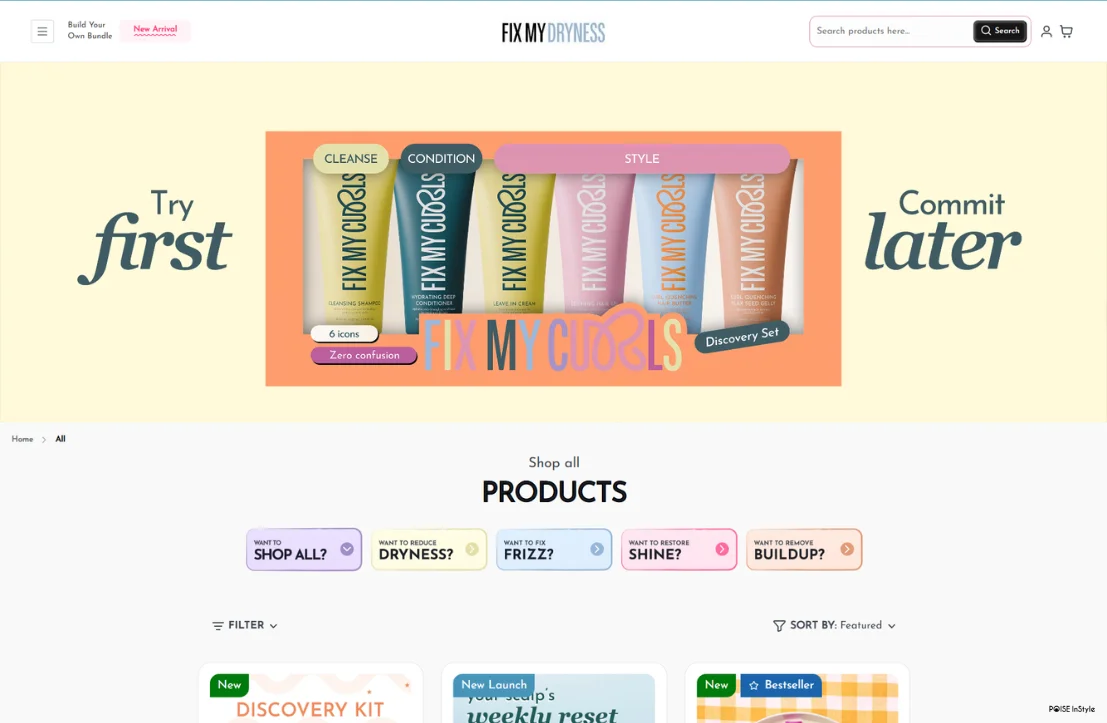
What started out as a modest online operation has grown into a direct-to-consumer business of some size. With demand on the rise, the brand made its way onto Amazon, Nykaa and other quick-commerce sites to be where its customers were, all while maintaining its direct ties to the community. This steady progress did not go unnoticed by investors.
Fix My Curls put together just under $1 million in seed capital from the likes of the Amazon Sambhav Fund and India Quotient. A $100,000 grant for female founders provided further impetus to put toward R&D and operations. While some startups might sacrifice their identity for the sake of scale, Anshita held fast to the clean formulations and community-led approach that set the company apart.
Her efforts were put in the spotlight in 2025 when Forbes Asia put her name on its 30 Under 30 list for Retail & Ecommerce, a nod to what can be made of a niche insight with enough purpose behind it.
Growing Beyond India While Staying True to Its Purpose
Today, Fix My Curls is a far cry from its original conception. The brand has shipped to over 10 countries and filled in excess of 500,000 orders, evidence enough that there is a worldwide market for good textured hair products. The range has been broadened to include discovery kits, gels, deep treatments and shampoos free of sulfates and parabens.
And yet the company has not given in to the lure of becoming a generic name in haircare. Anshita has kept the focus squarely on those with wavy, coily or curly hair. That kind of clarity is a strength in itself, and it has done much to foster the loyalty and trust the brand enjoys.
Anshita: The Founder and the Face of the Brand
If one were to single out a reason for Fix My Curls’ success, it would be Anshita’s choice to stay in plain sight. She has not put on the airs of a remote CEO; instead she has been unflinching in her willingness to lay bare the startup experience. Whether it is a milestone worth celebrating or an open talk about the failures and emotional toll of entrepreneurship, she has made herself visible.
On social media and in interviews, she has been candid about the hard parts of the journey. You will hear her discuss the challenges of fundraising, the self-doubt that comes with the territory, and the mistakes made in performance marketing and distribution. She has also spoken of more personal matters, like having to put college on hold after an accident or the particular loneliness of being a young founder working alone. That kind of transparency has made her story an asset for the brand.
It has meant that when customers buy a shampoo or styling product they are doing more than making a purchase; they are backing a founder who has gone through similar battles with confidence and identity. This has fostered a community around Fix My Curls and set it apart as a brand with a purpose, not just another name in beauty.
A New Perspective on Curly Hair in India
The company’s impact extends past the balance sheet. In India, curly hair was long considered unruly, something to be tamed and straightened for a wedding or a job interview. Advertising would have you believe smoothness was the only standard of beauty. Fix My Curls put an end to that sort of thinking. With its products and campaigns the brand has made a case for natural texture, pairing representation with the kind of education that tells you how to look after your hair properly.
For Anshita, this is about more than cosmetics. She makes the point that representation is tied to who you are. When people are no longer criticised for their natural hair but see it held up as something to be proud of, they start to see themselves in a new light.
Scaling the Business
With time, Anshita’s day-to-day problem solving has given way to the work of an operator building for the long term. Her attention is now on putting in place systems that can grow, from repeatable launch frameworks to hiring for mission fit, all while the business moves into international markets. The goal is to scale without sacrificing the authenticity that put Fix My Curls on the map.
What Makes the Story Worth Telling
There is much to be learned from Anshita Mehrotra’s path in the Indian startup world. It is evidence that you can build something large by addressing a very specific need. It shows a woman-led consumer brand can hold its own against the old guard on the strength of its community rather than an ad budget. And it underlines that representation is a commercial advantage if you truly understand your customer.
From a young woman fed up with products that did nothing for her curls to a multi-crore global operation with hundreds of thousands of customers, the trajectory is remarkable. Fix My Curls has given confidence to those told their hair required fixing. For any entrepreneur looking for direction, it is a reminder that the most enduring businesses come from tackling a personal issue that millions of others share in silence. In the process, Anshita has redefined what it means to be an inclusive D2C brand and an entrepreneur for a whole new generation.

