

There’s a quiet shift happening in sustainability and it’s not loud, flashy, or trend-driven. It’s happening inside labs, through science that most of us never see, yet will soon feel in what we wear, buy, and use daily.
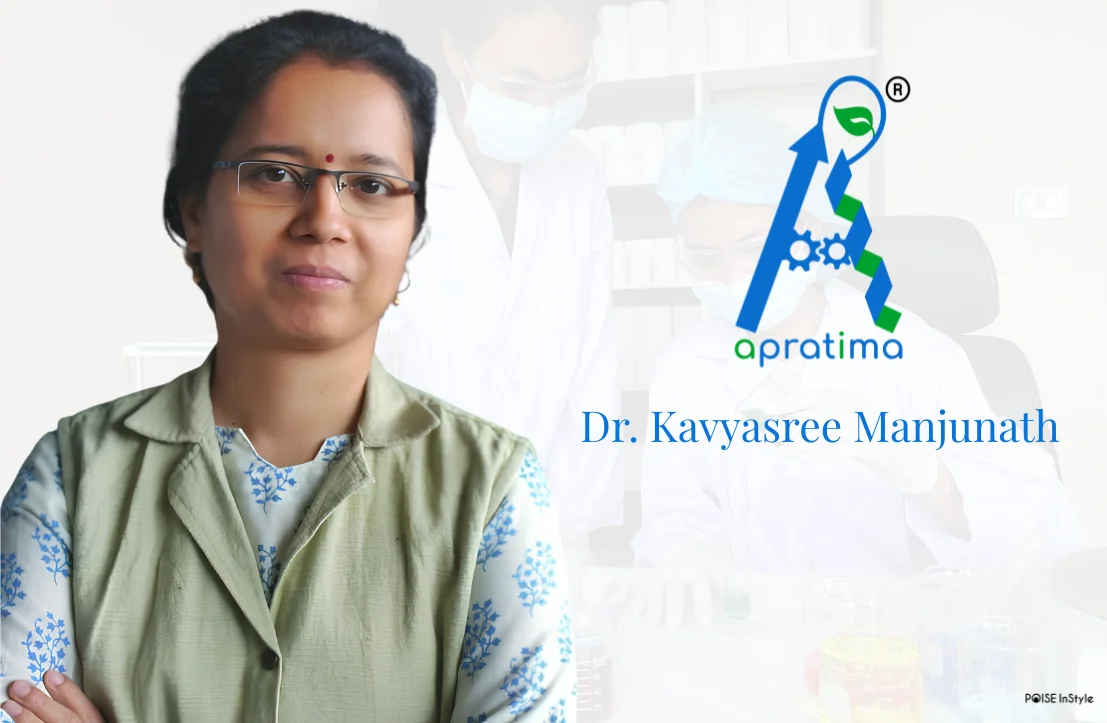
At the heart of this shift is Apratima Biosolutions, a Bengaluru-based startup founded by biotech innovator Dr. Kavyasree Manjunath. Her mission? To take one of the planet’s biggest problems– plastic waste and turn it into a resource that can be used again and again, without compromise.
And if that sounds ambitious, it is. But it’s also exactly what the future of sustainable fashion needs.
The Plastic Problem We’ve Normalised
Plastic has quietly become part of everything. From water bottles to activewear, it’s deeply embedded in our lifestyles– especially in fashion, where polyester dominates wardrobes.
India alone generates over 26,000 tonnes of PET waste every single day. That’s not just a number– it’s a reality reflected in overflowing landfills, polluted beaches, and microplastics entering our food chain.
The uncomfortable truth?[Text Wrapping Break]Even recycling hasn’t fully solved it.
- Traditional recycling often reduces material quality
- Many plastics still end up being downcycled or discarded
- Energy consumption remains high
So while we’ve been trying to manage plastic, we haven’t truly redesigned its lifecycle.
The Founder Who Saw Waste Differently
Dr. Kavyasree Manjunath didn’t set out to build just another sustainability startup. Her journey began with something far more personal– seeing plastic waste up close during environmental cleanups.
Instead of accepting it as an inevitable problem, she approached it like a scientist: What if plastic didn’t have to be waste at all?
With a PhD in biotechnology and research roots at IISc, she started experimenting with enzymes– natural biological catalysts that could break down complex materials.
After multiple trials, failures, and refinements, Apratima Biosolutions was born in 2022.
Today, it stands as one of India’s most promising deep-tech sustainability ventures– incubated at IIM Bangalore’s NSCREL and supported by C-CAMP.
The Science That Changes Everything
Let’s simplify what Apratima actually does because the magic lies in how elegantly complex science is applied.
Plastic like PET (used in bottles and polyester fabrics) is incredibly durable because of its tightly bonded molecular structure. That’s why it takes hundreds of years to degrade.
Apratima uses engineered enzymes– think of them as precision tools–that break these bonds down efficiently.
Here’s how the process flows:
- Waste PET is collected and introduced into a controlled environment
- Special enzymes break it into basic chemical building blocks
- These blocks are purified to near-virgin quality
- The material is reused to create new products without degradation
The result is not just recycling. It’s true circularity.
Why Fashion Should Be Paying Attention
This isn’t just an environmental story– it’s a fashion story too.
Most people don’t realise that synthetic fabrics like polyester are essentially plastic in disguise. And with fast fashion accelerating consumption, the demand for these materials keeps growing.
Apratima’s innovation creates a new possibility:
- Fabrics made from high-quality recycled plastic, not downgraded fibers
- Reduced dependence on virgin petroleum-based materials
- A closed-loop system where fashion waste feeds back into production
It’s the kind of shift that doesn’t just tweak sustainability– it redefines it.
What Makes Apratima Stand Out
There’s no shortage of “eco-friendly” claims in the market today. But Apratima’s approach stands out because it solves problems at the root level.
A few key advantages:
- Speed matters: Plastic broken down in hours instead of centuries
- Energy efficiency: Up to 70% lower energy usage than traditional methods
- Scalability: Modular systems that can integrate into industrial setups
- Quality retention: Output matches virgin-grade material standards
This combination is rare– and it’s what makes the model viable beyond just pilot projects.
Small Lifestyle Shifts That Align with This Future
While Apratima scales its technology, there’s a lot we can start doing right now to align with a more circular lifestyle.
It doesn’t have to be overwhelming. In fact, the most effective changes are often the simplest ones.
Everyday swaps that actually help
- Switch to steel or glass water bottles
- Carry reusable totes instead of plastic bags
- Choose refillable packaging wherever possible
Smarter fashion choices
- Look for natural fabrics like cotton, linen, or hemp
- Support brands working with recycled materials
- Buy less, but buy better
Conscious consumption habits
- Question impulse purchases
- Extend the life of what you already own
- Repair instead of replacing
These aren’t drastic changes– but they build a mindset that supports innovations like Apratima.
A Women-Led Vision in Deep Tech
Another powerful layer to Apratima’s story is its leadership.
In a sector where biotech and industrial innovation are often male-dominated, Dr. Kavyasree is building a company that actively supports women in STEM.
- A significant portion of the team includes women researchers
- Mentorship programs encourage young girls to explore science
- Workshops create awareness around sustainability and innovation
It’s a reminder that sustainability isn’t just about materials– it’s also about who is shaping the future.
The Road Ahead Isn’t Easy
Like any deep-tech innovation, scaling comes with challenges.
- High production costs in early stages
- Need for industrial partnerships
- Infrastructure and regulatory hurdles
But with funding support from government bodies and increasing industry interest, Apratima is steadily moving toward commercialization– targeting larger deployment in the coming years.
And once it scales, the impact could be massive.
India’s Circular Economy Moment
India is entering a phase where sustainability is no longer a niche conversation. It’s becoming a necessity– driven by policy, consumer awareness, and environmental urgency.
Startups like Apratima are at the forefront of this shift, offering solutions that are:
- Scientifically robust
- Environmentally meaningful
- Economically scalable
And as consumers, we’re not just observers– we’re participants in this transition.
The Bigger Picture: Style Meets Responsibility
At Poise Instyle, sustainability isn’t about giving up style– it’s about redefining it.
The future wardrobe isn’t just about aesthetics. It’s about:
- Where materials come from
- How they’re processed
- What happens to them after use
Apratima’s work fits seamlessly into this vision. It bridges the gap between innovation and everyday lifestyle, making sustainability feel less like a sacrifice and more like an upgrade.
Final Thoughts: Rethinking Waste, Redefining Value
What Apratima Biosolutions is building goes beyond recycling. It challenges how we think about waste altogether.
Plastic, once seen as disposable, is being repositioned as a resource–something that can be reused endlessly without losing value.
And that shift matters.
Because the future of sustainability won’t be built on guilt-driven choices. It will be built on smarter systems, better materials, and innovations that make doing the right thing effortless.
With pioneers like Dr. Kavyasree leading the way, that future feels closer than ever.
And maybe the next time you pick up a piece of clothing, you’ll pause–not just to admire how it looks, but to wonder where it came from, and where it’s going next.

