

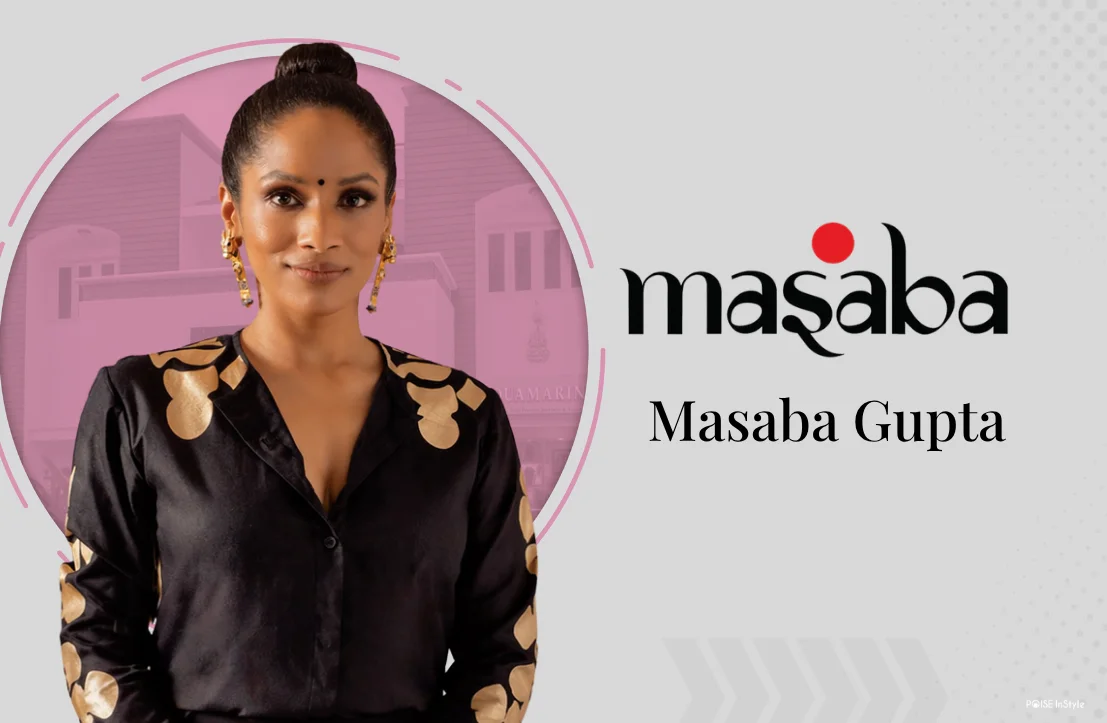
Inside House of Masaba and how Masaba Gupta turned prints, pop culture, and personality into a new-age fashion movement
There was a time when Indian wear came with a rulebook. Sarees were reserved for ceremonies, lehengas for weddings, and anything “designer” felt distant, almost intimidating. Then came Masaba Gupta, who quietly dismantled that rigidity and replaced it with something far more relatable- fashion that felt personal, expressive, and, most importantly, wearable.
At the centre of this shift is House of Masaba, a brand that didn’t just ride the wave of changing fashion trends but helped create it. What started in 2009 as a young designer’s experiment has now become a cultural marker for how millennials and Gen-Z engage with Indian wear. It’s bold, it’s playful, and it doesn’t take itself too seriously- and that’s exactly why it works.
A designer shaped by culture, contrast, and curiosity
Born into a world that was already rich in cultural influence, Masaba Gupta grew up between identities. As the daughter of Neena Gupta and Vivian Richards, her upbringing was anything but conventional. It was a mix of Indian roots, Caribbean influence, and global exposure, and that blend eventually found its way into her design language.
She studied apparel design and entered the fashion world early, launching her first collection at just 19. But even then, her work stood apart. While many designers leaned heavily on tradition, Masaba approached Indian wear with a fresh perspective- one that allowed her to question norms and play with them.
By the time she formally launched House of Masaba, it was clear she wasn’t interested in following established paths. She was building something new, something that spoke directly to a younger, more experimental audience.
Prints that speak louder than embroidery
If there’s one thing that defines House of Masaba, it’s the prints. Not delicate florals or predictable motifs, but bold, unexpected visuals- cows, cameras, lipstick icons, scripts, and pop-art-inspired graphics that feel almost like inside jokes turned into fashion.
These prints didn’t just stand out; they created a new visual vocabulary for Indian wear. They made it possible for a sari to feel fun, for a kurta to feel modern, and for traditional silhouettes to carry contemporary stories.
What makes this approach powerful is how relatable it is. Instead of drawing only from heritage or craft traditions, Masaba draws from everyday life- things people recognise instantly. In doing so, she bridges the gap between high fashion and daily culture.
Over time, these prints became synonymous with her brand. They were copied, recreated, and widely shared, but their originality always pointed back to one source.
Designing for real life, not just occasions
One of the biggest shifts Masaba introduced was in how Indian wear is worn. Traditionally, ethnic clothing was tied to events- weddings, festivals, family functions. It wasn’t something you reached for on a regular day.
Masaba changed that narrative.
Her designs focus on ease and movement, using fabrics like cotton, muslin, and chiffon to create silhouettes that are comfortable yet striking. The idea is simple: Indian wear shouldn’t feel like a costume. It should feel like an extension of your personality.
This is why her pieces often transition effortlessly from day to night. A sari can be styled for a brunch, a kurta can work with sneakers, and a lehenga doesn’t have to feel heavy or restrictive. The emphasis is on versatility, something that resonates strongly with younger consumers juggling multiple lifestyles.
Building a brand that lives online and offline
Long before digital-first became a buzzword, Masaba Gupta understood the power of being present where her audience already was- online. A significant part of House of Masaba’s growth came from its strong digital presence, particularly on platforms like Instagram.
But this wasn’t just about marketing. It was about storytelling.
Masaba used social media to share her process, her inspirations, and even her challenges. This transparency made the brand feel human. It wasn’t just a label selling clothes; it was a narrative people could connect with.
At the same time, the brand maintained a balance between accessibility and aspiration. It positioned itself in a space that wasn’t as exclusive as couture but still carried a sense of design-led value. This made it appealing to a wide audience- from young professionals to college students looking for something distinctive.

Expanding beyond fashion into a lifestyle
As House of Masaba grew, it didn’t stay limited to clothing. It expanded into accessories, jewellery, swimwear, and eventually beauty with the launch of Lovechild. This move reflected a deeper understanding of consumer behaviour.
Today’s shoppers don’t just want an outfit; they want an entire look, a cohesive identity. By offering multiple categories under one brand, Masaba created a lifestyle ecosystem where everything feels connected.
Collaborations, like the one with Amrapali Jewels, further strengthened this positioning, blending traditional craftsmanship with contemporary design.
This evolution shows how the brand adapted to changing expectations while staying true to its core aesthetic.
Surviving setbacks and scaling smartly
The pandemic brought unexpected challenges to the fashion industry, and House of Masaba was no exception. With events cancelled and retail slowing down, the brand faced a significant financial crunch. At one point, it was down to minimal reserves, a reality that many businesses quietly experienced during that time.
But what followed was a strategic shift.
In 2022, Aditya Birla Fashion and Retail Limited acquired a majority stake in the brand, bringing in both capital and operational strength. This partnership allowed House of Masaba to expand its retail presence and strengthen its backend systems.
The growth that followed was steady and structured, proving that creativity and business strategy can coexist successfully.
Why House of Masaba connects with Gen-Z
For Gen-Z, fashion is not just about trends- it’s about identity. It’s about expressing who you are without fitting into predefined categories. House of Masaba fits naturally into this mindset.
It encourages experimentation, celebrates individuality, and removes the pressure of “getting it right.” You can mix prints, pair traditional with modern, and create your own style without worrying about rules.
This freedom is what makes the brand feel relevant. It doesn’t dictate; it collaborates with the wearer.
A brand that changed how India dresses
Masaba Gupta’s journey is not just about building a successful fashion label. It’s about shifting how an entire generation approaches Indian wear. She made it less about tradition and more about interpretation, less about occasion and more about everyday life.
House of Masaba stands as proof that Indian fashion can evolve without losing its essence. It can be playful without being superficial, modern without being disconnected, and accessible without losing its design integrity.
In a landscape where trends come and go quickly, her work has managed to stay consistent because it is rooted in something deeper- understanding people.
And that is what truly sets her apart.

